 EN
EN Can You Have More Than One Etsy Shop? A Complete Guide 2026
Can you have more than one Etsy shop? Yes, you can. Etsy allows sellers to run multiple shops, making it possible to build separate stores for different niches, product lines, or target audiences. However, running multiple shops isn’t as simple as creating another storefront; each shop must follow Etsy’s rules and be managed separately.
So, is opening a second Etsy shop the right move for you? In this guide, we’ll break down how many Etsy shops you can have, when it makes sense to create a second shop, how to open and manage multiple stores, and the pros and cons you should consider before getting started.
Table of Contents
How Many Etsy Shops Can You Have?
The short answer is yes, but it depends on the seller. With over 86 million active buyers worldwide and approximately $2.85 billion in platform revenue in 2025, Etsy remains a leading marketplace in the creative goods industry.
So, how many Etsy shops can you have? Etsy does not set a specific limit on the number of shops you can own. You can operate multiple Etsy shops as long as each shop meets Etsy’s requirements and follows its policies.
Is It Better to Have One Etsy Shop or Multiple?
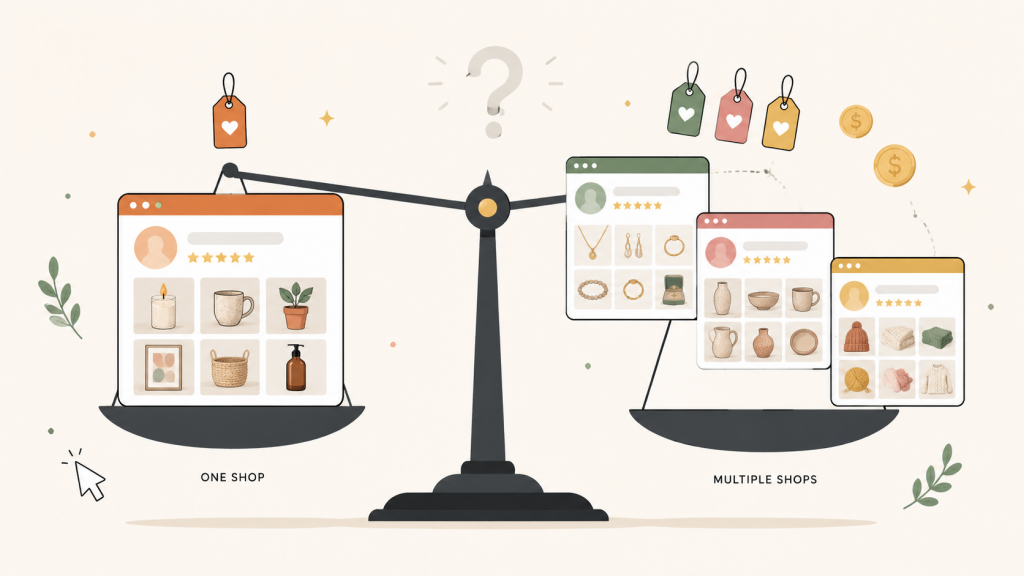
There’s no one-size-fits-all answer. The right choice depends on your product range, target audience, business goals, and capacity to manage multiple stores.
One Etsy shop is usually the better choice if your products share a clear theme, target a similar audience, or your core product category hasn’t established consistent profitability yet. It’s also a better fit if you’re still learning how Etsy works.
A focused shop with a cohesive product range can provide a clearer shopping experience and make it easier to build a recognizable brand. If your main concern is keeping your listings organized, you may not need a second shop at all—Etsy’s free Shop Sections can help you group related products within the same storefront.
Multiple Etsy shops may make more sense if you sell products aimed at distinctly different audiences, such as handmade jewelry and digital printables, or if you’re developing a new brand that doesn’t naturally fit your existing store. A second shop can give you more flexibility to build a separate brand identity and test a new product direction while keeping your original store focused.
When Should You Create A Second Etsy Shop?
A second Etsy shop makes the most sense in the following scenarios:
- You’re entering a completely different niche. Customers shopping for hand-knitted baby clothes are unlikely to be looking for rustic wood furniture. When audiences don’t overlap, separate shops can create clearer branding and more focused SEO for each market.
- Your product lines may confuse buyers. Selling digital and physical products in the same shop can create confusion, especially when customers have different expectations about delivery and fulfillment.
- Your products have different licensing terms. Printable sellers may separate personal-use and commercial-use products into different shops to keep licensing terms clear and easy to understand.
- You have different shipping or regional needs. If your products require different shipping strategies or pricing across regions, separate shops can give you more flexibility.
- You want a low-risk testing ground. A second shop can help you test a new product line or brand identity without affecting the shop that already supports your business.
Etsy's Rules for Running Multiple Shops
| # | Rule | What It Means |
| 1 | One shop per account, one account per email | Each shop requires its own separate Etsy account with a unique email address |
| 2 | Disclose every shop you operate | All shops you run must be listed in the Public Profile of each account |
| 3 | No duplicate shops or listings | Etsy's Seller Policy prohibits shops created for "shilling, manipulating search, or circumventing policies" |
| 4 | Sharing financial details is allowed | The same credit card, bank account (Etsy Payments), taxpayer ID, and LLC can be used across all shops |
| 5 | Shop names must be unique platform-wide | No two shops can share the same name |
How to Open A Second Etsy Shop?
The process is similar to opening your first shop, but you’ll need to start with a brand-new account:
Step 1: Create a new email address. Each Etsy account requires a unique email address. If you want to reuse an email associated with a closed shop, change the email on that account first to free it up.
Step 2: Register a new account. Sign out of your current shop or use a different browser. Go to Etsy.com, click Sign in → Register, and sign up with your new email address. Then verify it through Etsy’s confirmation email.
Step3: Set up the shop. From Your Account, click Sell on Etsy and follow the familiar setup process: choose your preferences, including language, country, and currency, select a unique shop name, and complete billing and Etsy Payments. You can use the same bank account and credit card.
Step 4: Build the storefront. Add your icon, banner, announcement, policies, shipping profiles, and first listings. Make sure each element reflects the new shop’s niche rather than simply copying your original shop.
Step 5: Disclose your shops. List all your Etsy shops in the Public Profile of each account. It only takes a few minutes and keeps you fully compliant.
Pros and Cons of Having Multiple Etsy Stores
Running multiple Etsy stores can give you more flexibility, but it also comes with extra work. Before opening a second shop, consider whether the benefits outweigh the added management.
Pros
- Clearer branding. Each shop can focus on a specific niche, product category, or target audience. This makes it easier to build a consistent brand and attract the right customers.
- Better SEO focus. A focused shop allows you to create listings around a more specific set of keywords and search terms, which can make your SEO strategy more targeted.
- Different product strategies. You can use separate shops to test different niches or product types without mixing unrelated products in the same storefront.
- More room to grow. If one shop performs well, a second store gives you another opportunity to expand into a different market or product category.
- Diversified income. When one niche slows, the other keeps revenue flowing.
- Cross-promotion potential. Buyers in one shop discover the other via your profile or package inserts.
Cons
- More work to manage. Every shop needs its own listings, inventory, customer service, marketing, and updates. Managing multiple stores can quickly increase your workload.
- Higher operating costs. Llisting fees, 6.5% transaction fees, payment processing, Etsy Plus, ads, and per-shop tool pricing all multiply.
- More difficult to maintain consistency. Keeping product quality, customer service, branding, and shop policies consistent across multiple stores requires more time and attention.
- Splitting your focus. Instead of putting all your effort into growing one shop, you’ll need to divide your time between multiple stores. If your first shop still has plenty of room to grow, opening another one may not be the best use of your resources.
- Shared policy risk. A serious violation in one shop can suspend all linked shops
How to Manage Multiple Etsy Shops Effectively
Managing multiple Etsy shops can become overwhelming if everything is handled manually. A clear system can help you stay organized and keep each store running smoothly.
1. Use the Etsy Seller app
The app lets you receive notifications, messages, and order updates from multiple accounts without constantly logging in and out. It can make managing multiple shops much more convenient.
2. Assign each shop its own browser
Most browsers keep only one Etsy account signed in. You can log Shop A into Chrome and Shop B into Firefox or Edge, or use a dedicated browser profile for each shop so you can keep both open side by side.
3. Separate your books from day one
Sharing a bank account is fine, but your financial records should remain separate. Track revenue and expenses for each shop individually.
4. Batch your work
Organize your time by shop and task. For example, handle Shop A’s orders on Monday and Shop B’s marketing on Tuesday. This helps ensure that no inbox goes unanswered.
5. Use Tools to Save Time
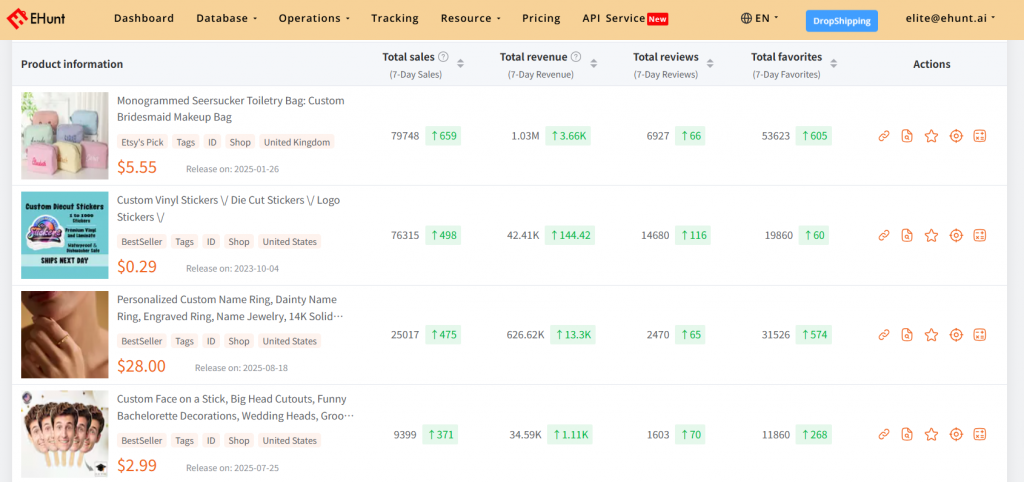
The right tools can reduce repetitive work and make managing multiple shops more efficient. For example, you can use EHunt to research products, analyze competitors, and optimize your Etsy listings without switching between multiple research tools.
6. Cross-promote thoughtfully
Etsy’s multi-shop checkout allows buyers to purchase from multiple shops in a single payment, while each shop still sends its own receipt. This makes it easier for customers who discover one of your shops to purchase from another. You can also add a promo card to each package introducing your other brand.
7. Outsource before you burn out
Part-time help with customer service or fulfillment can free up your time to focus on growing the new shop.
FAQs
Can you have two Etsy shops on one account?
No. Each shop requires its own separate account. There's no way to attach a second storefront to an existing login, and Etsy can't merge or transfer shop information between accounts. To run a second shop, register a new account with a new email.
Can you have two Etsy shops on one bank account?
Yes. You can use the same bank account for two Etsy shops, as long as each shop is registered to a separate Etsy account and you follow Etsy’s requirements for operating multiple shops.
Can I have multiple Etsy shops under one email
No. Every Etsy account, and therefore every shop, needs its own unique email address. You'll need a fresh inbox for each additional shop
Will opening a second shop reduce my original shop traffic?
Not directly. Etsy's rankings are shop-specific, so a new shop doesn't cannibalize your original shop's listings, keywords, or reviews, and your established shop keeps all its SEO equity and sales history. The real risk is indirect: your time, attention, and marketing budget are finite. If running Shop B means fewer new listings and slower replies in Shop A, Shop A will feel it.
Can I use the same web browser for both of my Etsy shops?
Yes. You can use the same web browser to manage multiple Etsy shops by creating a separate browser profile for each Etsy account. This lets you stay logged into different Etsy accounts simultaneously without constantly signing in and out.
Conclusion
So, can you have more than one Etsy shop? Yes. But having multiple shops only makes sense when each one has a clear purpose. If your first shop is stable and your new idea targets a different audience, a second shop can help you build a focused brand, strengthen your SEO, and diversify your income. Otherwise, Shop Sections may be a simpler way to organize your products without doubling your workload.
If you’ve decided to open a second shop but haven’t found the right niche yet, EHunt can help you conduct market research before you commit. Use it to explore niche opportunities, assess market demand, and analyze competitors, so you can choose a product direction with greater confidence.