 EN
EN Is Selling on Etsy Worth It in 2026? A Complete Guide
Is Selling on Etsy Worth It in 2026? Many new entrepreneurs and creative sellers are asking this question as competition on Etsy continues to increase. While Etsy remains a popular marketplace for handmade products, digital downloads, and personalized items, success requires more than simply opening a shop.
In this guide, we’ll explore whether selling on Etsy is still worth it, covering the benefits, challenges, earning potential, and strategies that can help sellers make smarter decisions and find profitable opportunities in 2026.
Table of Contents
Is It Worth Selling on Etsy 2026
The short answer is yes, but it depends on the seller. With over 86 million active buyers worldwide and approximately $2.85 billion in platform revenue in 2025, Etsy remains a leading marketplace in the creative goods industry.
However, what started as a platform focused mainly on artisan products has evolved into a comprehensive and highly competitive marketplace with millions of sellers. Whether Etsy is worth your time ultimately depends on your product type, SEO skills, pricing strategy, and long-term business goals.
The Current State of Etsy Marketplace
| Metric | Data (late 2025/early 2026) |
| Active buyers | ~86–91 million globally |
| Active sellers | ~5.5–6.6 million |
| Buyer-to-seller ratio | ~15:1 |
| Buyer-to-seller ratio | ~15:1 |
| Active listings | Over 100 million |
| Personalized product share | ~33% of sales |
| Mobile traffic | ~66% |
Etsy's buyer base skews toward Gen Z and Millennials (nearly half of visitors are 18–34). Top-selling categories include handmade jewelry, craft supplies, wedding items, paper goods, and home decor. While shopper interest remains strong, popular categories are highly saturated, standing out demands strategic SEO, compelling photography, and genuine niche understanding.
What Are The Pros and Cons of Selling on Etsy
Before opening an Etsy shop, it’s important to understand both the opportunities and challenges that come with selling on the platform.
Pros of Selling on Etsy
- Massive built-in audience: Tens of millions of buyers actively searching for unique, handmade, and personalized items, no need to build an audience from scratch.
- Low startup costs: Opening a shop is free; listing fees are just $0.20/item with no monthly subscription.
- Quick, easy setup: Launch a shop in minutes with no technical skills, no coding, hosting, or web design required.
- Built-in marketing tools: Etsy Ads, Offsite Ads, Share & Save, targeted discounts, and social media integration.
- Trust and credibility: Etsy's review system and buyer protection give new shops instant credibility.
- Rich learning resources: Etsy Seller Handbook, plus third-party tools like EHunt for product research and SEO optimization.
Cons of Selling on Etsy
- Fierce competition: 5–6 million sellers mean crowded categories, price wars, and copycats replicating successful designs.
- Mass-produced item influx: Factory goods flood categories, undercutting genuine artisans despite Etsy's anti-reselling policies.
- Limited brand control: All shops share the same template, you can't customize fonts, layout, or navigation.
- Platform dependence: Etsy controls rules, fees, and algorithms; unexpected suspensions can disrupt your business.
- Payment delays and limited customer data: Funds take days to transfer; you have minimal access to buyer information for marketing.
Who Should Sell on Etsy?
Etsy is not the right platform for every seller, but it can be a great opportunity for those who have the right products, mindset, and business goals. Before starting an Etsy shop, it’s important to understand whether your skills, resources, and expectations align with what the marketplace offers.
Etsy is best for:
- Creators, artists, and crafters of handmade or original products
- Beginners wanting to test e-commerce with minimal risk
- Sellers without large social media followings who need built-in traffic
- Print-on-demand sellers with original designs
- Niche product sellers (custom jewelry, personalized gifts, vintage items, digital downloads)
- Digital product creators (templates, printables, planners) with near-zero unit costs
Etsy is NOT ideal for:
- Mass-produced resellers (explicitly prohibited by policy)
- Established brands needing full storefront and branding control
- Sellers needing stable income within the first few months
- Anyone seeking hands-off passive income. Etsy success demands consistent effort
Best-selling Products on Etsy
Etsy is known for unique, creative, and personalized products, making certain categories particularly popular among shoppers. If you are considering starting an Etsy shop, exploring established best-selling categories can help you identify potential niche opportunities.
Art & Prints
Art remains a popular category on Etsy, including wall art, digital prints, illustrations, and personalized artwork. Sellers can also explore niche styles, specific themes, or custom designs to differentiate their products.
Stickers
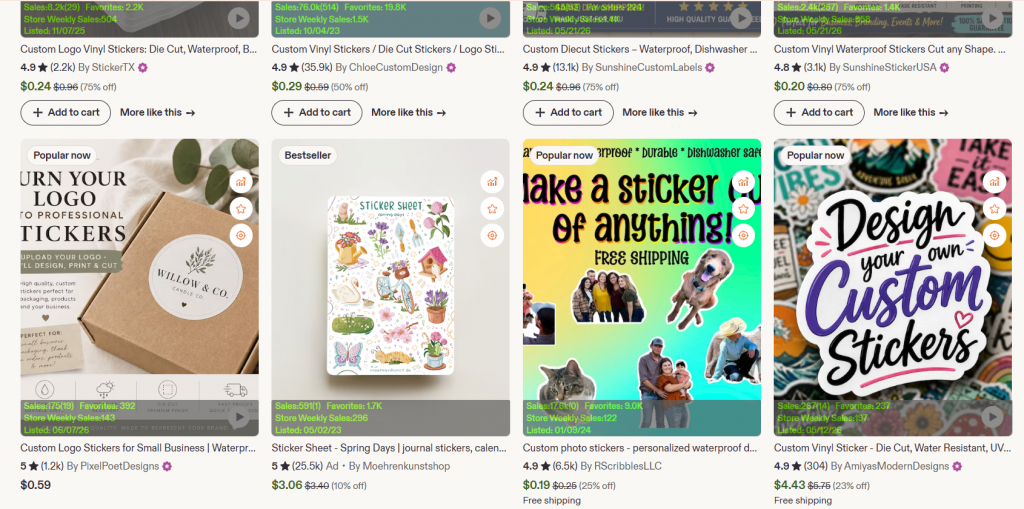
Stickers are affordable, easy to ship, and popular for personalizing laptops, water bottles, journals, and other items. Niche designs, personalized stickers, and themed sticker sets can be good opportunities for new sellers.
Crochet
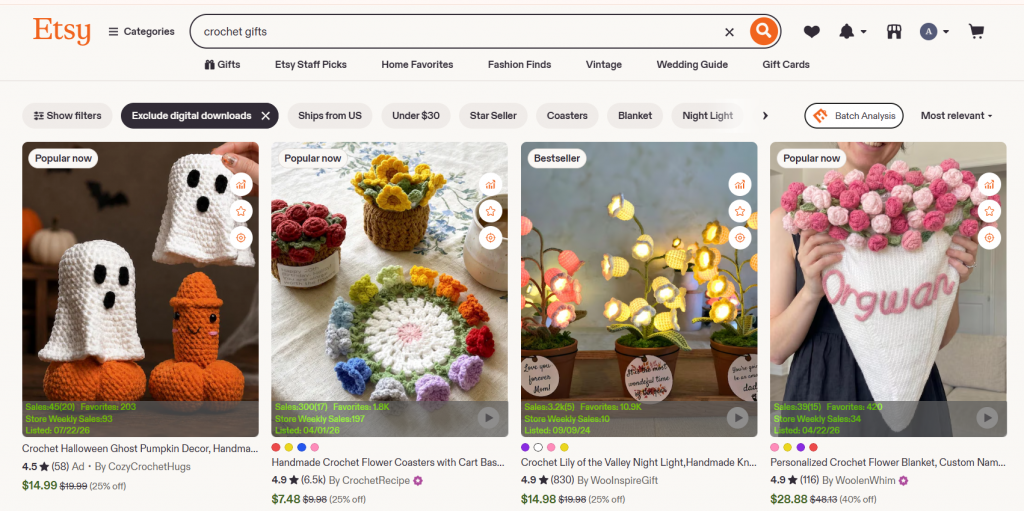
Crochet products appeal to shoppers looking for handmade and unique items. Popular products include crochet plushies, bags, accessories, home decor, and clothing. Customization and distinctive designs can help sellers stand out in this competitive category.
Vintage Items
Vintage clothing, jewelry, home decor, collectibles, and accessories are another strong category on Etsy. Sellers with access to unique vintage products can attract buyers looking for items that are difficult to find elsewhere.
Digital Products
Digital products such as templates, planners, invitations, printable artwork, and business resources can be attractive because they require no physical inventory or shipping. Sellers can create a product once and sell it repeatedly.
Etsy Alternatives
While Etsy remains one of the most popular marketplaces for handmade, creative, and niche products, it is not the only option available to online sellers. Here are some popular Etsy alternatives worth considering.
eBay
eBay is one of the world’s largest online marketplaces, offering sellers access to a broad customer base across many product categories. Unlike Etsy, which focuses heavily on handmade, personalized, and creative products, eBay supports a much wider range of items, including electronics, collectibles, fashion, home goods, and more.
For sellers who want to test different product categories or sell products based on competitive pricing and availability, eBay can be a strong alternative.
Amazon Handmade
Amazon Handmade is Amazon’s dedicated marketplace for handcrafted products, allowing artisans to sell handmade goods to Amazon’s massive customer base. It can be a great choice for creators who want access to Amazon’s high purchase intent shoppers while maintaining a focus on handmade products.
Compared with Etsy, Amazon Handmade provides the advantage of Amazon’s trusted shopping experience and powerful fulfillment options through services like Fulfillment by Amazon (FBA). However, competition can be intense, and sellers may need to meet Amazon’s quality standards while adapting to a more performance-driven marketplace.
Shopify
Unlike marketplace platforms such as Etsy, eBay, and Amazon Handmade, Shopify allows sellers to build their own independent online store. Sellers have complete control over branding, customer experience, pricing, and marketing strategies.
Shopify is a strong option for businesses that want to build a long-term brand and develop direct relationships with customers. However, unlike Etsy, Shopify does not provide built-in traffic. Sellers need to invest in SEO, advertising, email marketing, social media, or other channels to attract visitors and generate sales.
💡Pro reading:
How to Increase Your Chances of Success on Etsy
Selling on Etsy can be a profitable opportunity, but success rarely comes from simply opening a shop and uploading products. With increasing competition, sellers need a strategic approach that combines product research, Etsy SEO, pricing optimization, offsite marketing and continuous improvement. Here are some proven strategies to increase your chances of building a successful Etsy business.
1. Choose the Right Niche
Choosing the right niche is one of the most important steps in building a successful Etsy shop. Instead of entering an oversaturated market, sellers should look for products with strong demand, manageable competition, and opportunities for differentiation.
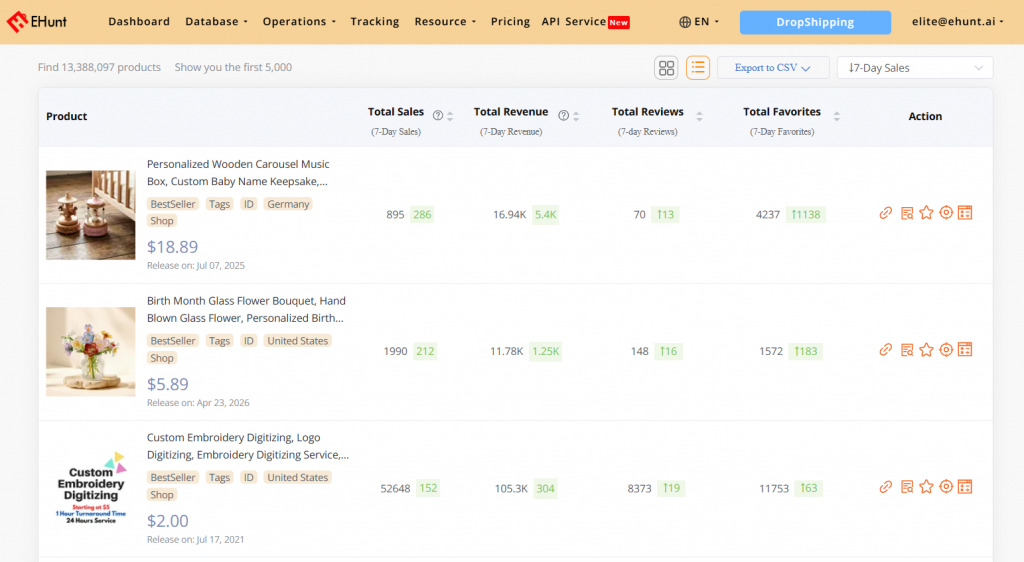
Tools like EHunt can help Etsy sellers research millions of Etsy listings, analyze successful shops, and discover profitable product opportunities based on real marketplace data.
2. Master Etsy SEO to Improve Visibility
Etsy SEO plays a major role in helping customers discover your products. To improve your search rankings, sellers should:
- Use relevant long-tail keywords in product titles
- Fill all 13 Etsy tags with targeted keywords
- Add high-quality images that match customer search intent
- Write detailed, keyword-rich descriptions
- Regularly update keywords based on performance
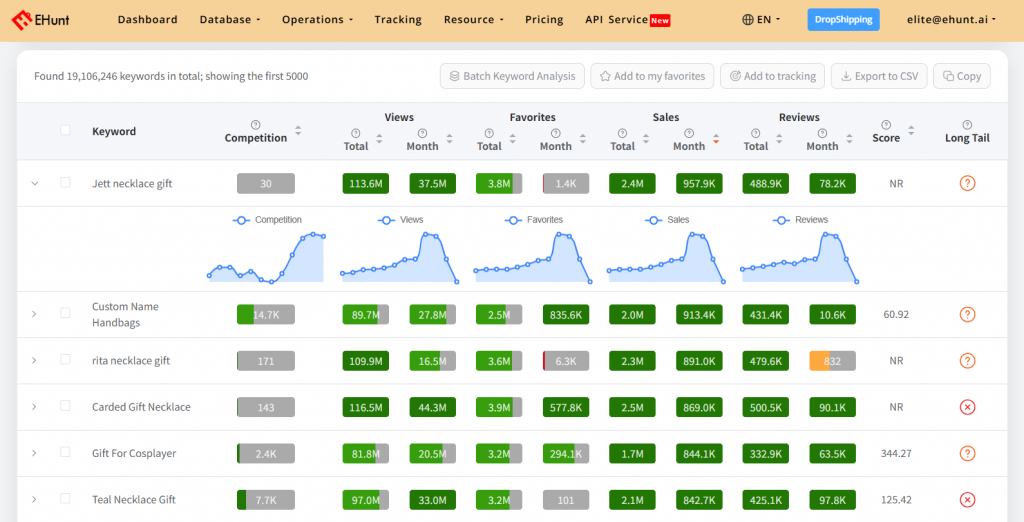
Finding the right keywords is often challenging, especially in competitive categories. EHunt Etsy keyword tool can help sellers identify high-potential keywords to get more visibility.
3. Invest in High-Quality Listing Images
Product images are one of the first things customers notice when browsing Etsy. Clear, professional, and lifestyle-focused photos can significantly influence buying decisions, while poor-quality images may cause shoppers to choose competitors instead.
Use all available image slots to showcase different product angles, sizes, details, and real-life use cases. Your photos should not only display the product but also help customers imagine how it fits into their lives.
4. Price Products to Protect Your Profit Margins
Many new sellers focus only on generating sales but overlook the importance of profitability. When setting prices, consider all costs, including materials, production time, Etsy fees, advertising expenses, and shipping costs.
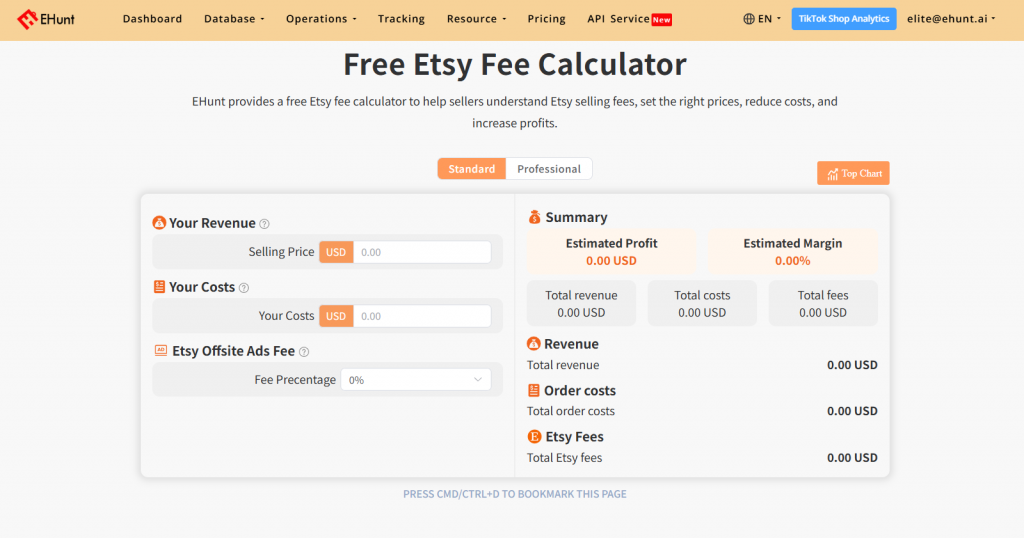
Using tools like EHunt Etsy fee calculator can help you understand your true profit margin and avoid underpricing your products. A profitable shop is built on sustainable pricing, not just high sales volume.
5. Create Incentives That Encourage Larger Orders
Offering incentives such as free shipping thresholds, bundle deals, or discounts can encourage customers to purchase more. Etsy’s shipping incentives can also help improve conversion rates by making your listings more attractive to buyers.
6. Build Customer Loyalty
Long-term success on Etsy depends on more than attracting new customers. Providing excellent customer service, responding quickly to messages, and creating a positive buying experience can help sellers earn better reviews and build customer trust.
Consider adding personalized thank-you notes, creating customer discounts, and offering related products or bundles to encourage repeat purchases.
7. Test Products Before Scaling Your Business
Instead of investing heavily in a single product idea, successful sellers often test multiple products and analyze performance before scaling.
A simple 90-day testing approach can help:
- Launch a small group of products
- Monitor views, favorites, traffic sources, and sales
- Identify which products show growth potential
- Improve or remove underperforming listings
Data-driven decisions are more reliable than relying on assumptions. By analyzing product performance and market trends, sellers can focus their efforts on products with stronger potential.
8. Diversify Your Sales Channels
While Etsy can be a powerful marketplace, relying entirely on one platform comes with risks. Changes to Etsy’s algorithm, policies, or competition levels may affect your sales.
Successful sellers often use Etsy as a starting point and gradually expand to other channels, such as their own website, social media platforms, or additional marketplaces. Building a diversified business can provide more stability and long-term growth.
FAQs
Is etsy free to sell?
No. Key fees (US): $0.20/listing, 6.5% transaction, 3% + $0.25 payment processing, and 12–15% Offsite Ads (mandatory under $10K/year). Etsy Plus is optional at $10/month. For a $100 sale, mandatory fees total ~$9.95 (~10%). Smaller orders face higher effective rates.
Is it still profitable to sell on Etsy?
Yes, selling on Etsy can still be profitable in 2026. However, success depends on choosing the right products, managing costs, understanding customer demand, and optimizing your listings for Etsy SEO.
What is the downside of selling on Etsy?
Accumulating fees, fierce competition, mass-produced goods undercutting handmade sellers, limited branding, platform dependence, mandatory Offsite Ads for small sellers, payment delays, and risk of unexpected account suspension.
Is it better to sell on Etsy or your own website?
Etsy is better for beginners who need built-in traffic and want to test with minimal risk. Your own website is better for established brands wanting full control and customer data ownership. Best strategy: start on Etsy, then add a website as you grow.
How Much Money Can You Make Selling on Etsy?
Successful sellers earn $43,000–$46,000 annually; top shops generate $65,000+/month. But reality check: 2025 collective earnings were ~$9.91 billion across 5–6 million sellers (avg ~$1,131/year), and 50–67% of shops earn under $1,000/year. Running a profitable shop takes ~40 hours/week. Calculate your hourly rate after all fees and time — if it doesn't meet expectations, adjust pricing or product.
Is it worth selling digital products on etsy?
Yes, digital products are among Etsy's most profitable categories. Near-zero unit costs, no shipping logistics, and high profit margins. A single printable, template, or design file can generate passive income for months. The main challenge is competition, but for sellers creating genuinely useful digital products, Etsy offers exceptional ROI.
Final Verdict
So, is selling on Etsy worth it in 2026? The answer is yes, but it depends on your strategy. Etsy still provides valuable opportunities for sellers who offer unique products, understand their target customers, and are willing to invest time in product research, SEO optimization, and improving their listings. While competition is higher than ever, sellers who approach the platform strategically can still build profitable businesses.
To increase your chances of success, it’s important to make decisions based on real market data instead of guesswork. Tools like EHunt can help sellers research profitable products, analyze keywords, and understand competitors, making it easier to find new opportunities and grow their Etsy shops.