 EN
EN Redbubble vs Etsy 2026: Which Is Better for Online Business?
If you’re an artist, designer, or POD seller comparing Redbubble vs Etsy to start an online business, the choice can significantly impact your success in 2026. Both platforms allow you to sell creative products online, but they work in very different ways. In this guide, we’ll break down Redbubble vs Etsy in terms of fees, traffic, products, and profitability to help you decide which platform is better for your online business.
Table of Contents
What is Redbubble?
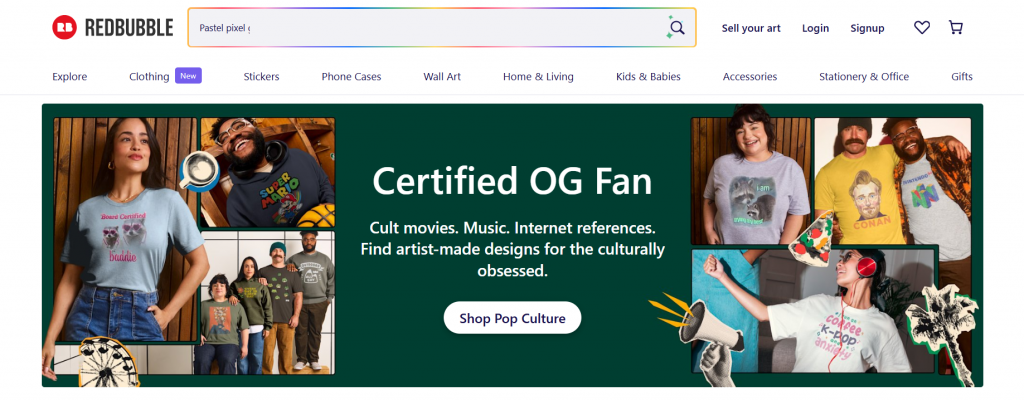
Redbubble is a print-on-demand marketplace that allows artists and designers to sell their work on a wide range of products without handling production, inventory, or shipping. Once you upload a design, Redbubble automatically applies it to items like T-shirts, hoodies, stickers, and more, then fulfills orders on your behalf when customers make a purchase.
The platform is especially popular among independent artists because it removes most of the operational work involved in running an online business. Instead of managing a storefront or dealing with logistics, creators can focus on producing new designs while Redbubble takes care of manufacturing, fulfillment, and customer service.
What is Etsy?
Etsy is a global online marketplace where creators sell handmade goods, vintage items, craft supplies, and digital products. It has a very broad product range, making it one of the most popular platforms for creative entrepreneurs.
In recent years, Etsy has also become a major platform for print-on-demand sellers. Many sellers use Etsy to sell custom-designed products like apparel, posters, mugs, and accessories by connecting their store with POD fulfillment services.
Unlike fully automated marketplaces, Etsy gives sellers more control over branding, pricing, and customer experience.

Selling on Redbubble vs Etsy: Full Comparison
Redbubble and Etsy are both popular platforms for artists, but they operate very differently. To help you decide which platform is right for your goals, let's compare Redbubble vs Etsy across several important factors.
Sign-up process
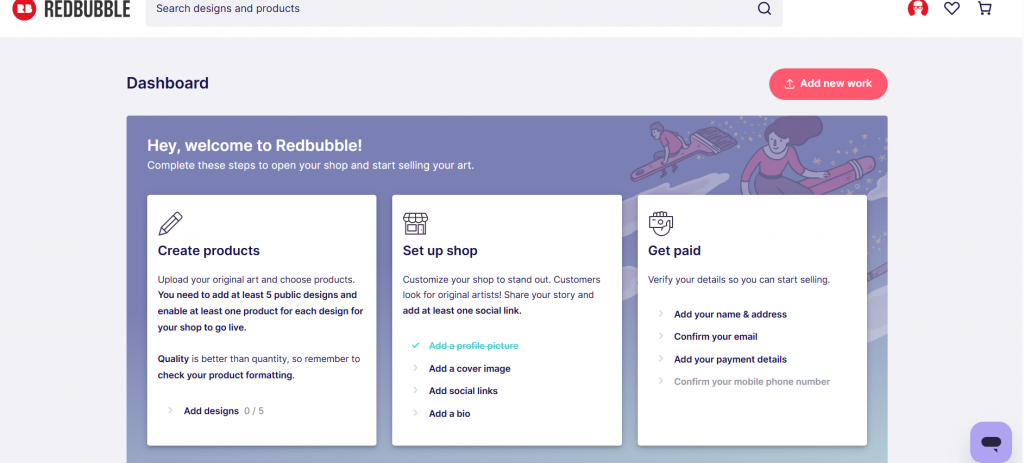
Creating a Redbubble account is very straightforward. You only need to provide basic information, including your name, email address, and password, to get started. After signing up, you can immediately upload your designs and complete your profile by adding details such as your name, address, phone number, and bank account information.
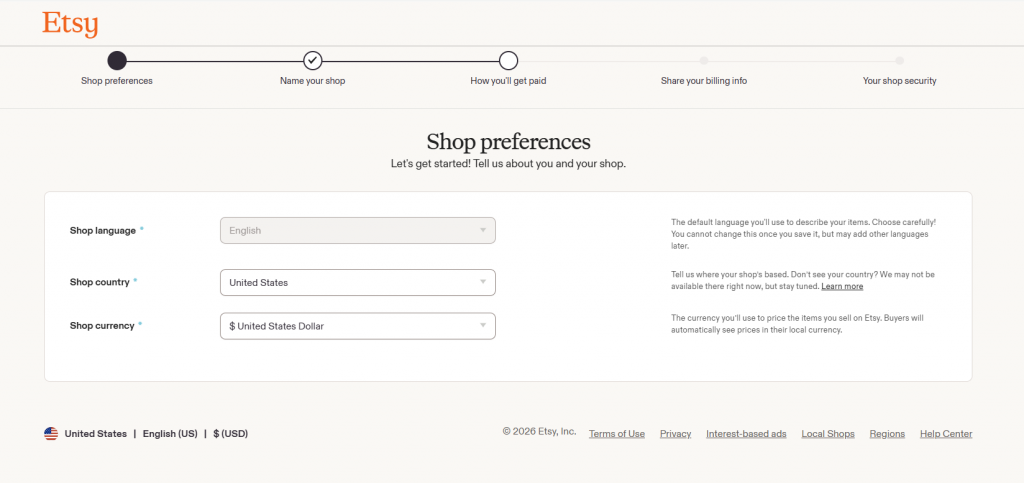
Opening an Etsy shop is slightly more complicated. After creating your account and setting up your personal and payment information, you'll need to create your first listing before your shop can go live. Since Etsy sellers are responsible for managing products and fulfillment themselves, there are more details to configure compared with Redbubble.
Traffic and Audience
Traffic is one of the biggest differences between Redbubble and Etsy. Redbubble receives around 16 million monthly visits, while Etsy attracts approximately 434 million monthly visits.
Redbubble mainly serves customers looking for artist-designed products such as stickers, apparel, and posters. However, its relatively small audience means sellers often need to drive traffic themselves through social media, Pinterest, or other external marketing channels.
Etsy has a much larger and more diverse customer base, covering handmade products, digital downloads, vintage items, and print-on-demand products. The huge amount of traffic creates more sales opportunities, but it also means stronger competition. Success on Etsy usually requires effective SEO.
Fee Structure
Redbubble does not charge listing fees. Instead, sellers earn royalties based on the markup they set above Redbubble's base price. This makes it a low-risk option for beginners.
Etsy uses a more traditional fee structure. Sellers pay:
- $0.20 listing fee per item
- 6.5% transaction fees
- 3% + $0.25 payment processing fees.
Additional advertising costs may apply if you use Etsy Ads or Offsite Ads.
Although Etsy's fees are higher, many sellers find that the platform's larger audience can offset the extra costs.
Product Catalog
Redbubble offers over 70 print-on-demand products, including stickers, apparel, wall art, mugs, and accessories. Product options are limited to Redbubble's catalog.
Etsy supports a much wider range of products. Sellers can offer handmade items, vintage products, digital downloads, craft supplies, and print-on-demand products. You can also work with multiple suppliers and expand into new niches more easily.
Fullfillment
Redbubble handles the entire fulfillment process. It takes care of printing, packaging, shipping, and customer delivery, allowing artists to focus on creating designs.
On Etsy, fulfillment depends on your business model. Sellers can ship products themselves or use print-on-demand services like Printify or Printful. This provides more control but also requires more management.
Payment
Redbubble pays sellers monthly once they reach the minimum payout threshold($20). Available payout methods vary by country and typically include PayPal and bank transfer.
Etsy uses Etsy Payments, which supports a wide range of payment methods, including credit cards, PayPal, Apple Pay, Google Pay, and more. This gives customers greater flexibility at checkout and helps improve the overall shopping experience.
Etsy lets you choose how often you want payments to be forwarded to your chosen account: daily, weekly, biweekly, or monthly. Whichever option you choose, you will need to meet the minimum threshold for the money to be sent, and Etsy will always send earnings in your local currency.
Customer service
Redbubble handles customer service on their side, so sellers won’t have to take care of refunds or returns.
On Etsy, sellers are responsible for providing customer support and handling disputes. While this requires more effort, it also allows sellers to build stronger relationships with customers and maintain control over the shopping experience.
Integrations
Redbubble is a closed ecosystem with limited third-party integrations. Sellers have fewer options for automation and external tools.
Etsy offers a large ecosystem of apps and integrations. Sellers can connect with print-on-demand providers like Printify and Printful, use SEO tools, inventory management software, and analytics platforms to scale their businesses.
Pros and Cons of Selling on Redbubble
Redbubble is a popular platform for artists and print-on-demand sellers who want a hands-off business model. However, while it offers convenience and simplicity, it also comes with some limitations.
Pros
- Large artist base: Over 800,000 artists contribute diverse and unique designs..
- Wide product range: Sellers can print their artwork on a vast range of products.
- Simple fee structure: Redbubble's pricing model is easy to understand, and sellers can adjust their markup to control their profit margins.
- Zero fulfillment work: Redbubble handles production, packaging, shipping, and customer service, allowing sellers to focus solely on creating designs.
- Easy to get started: Setting up a store and publishing products is quick and beginner-friendly.
Cons
- Limited pricing control: Redbubble sets the base price for products, and sellers can only increase their royalty margin on top of that, limiting their pricing flexibility.
- No direct customer relationship: It's difficult for sellers to build trust and encourage repeat purchases.
- No branding: Orders are fulfilled under the Redbubble brand, so sellers cannot create a unique brand identity or customize the customer experience.
Pros and Cons of Selling on Etsy
Etsy's massive audience creates significant opportunities, but sellers should also be aware of the challenges.
Pros
- Large and established customer base: Etsy attracts hundreds of millions of monthly visits.
- Built-in analytics: Etsy provides insights into shop performance, traffic sources, and listing statistics, helping sellers make data-driven decisions.
- Convenience and accessibility: Your Etsy account can be synced across multiple devices, allowing you to manage your shop and create listings anywhere.
- Strong branding opportunities: Unlike Redbubble, Etsy allows sellers to build their own brand, communicate directly with customers, and encourage repeat purchases.
Cons
- Saturated market: With millions of active sellers, competition can be intense.
- Complicated fee structure: Etsy charges listing fees, transaction fees, payment processing fees, and potentially advertising fees, making costs more difficult to calculate.
- Higher upfront costs: Compared with Redbubble, starting an Etsy business usually requires more investment in listings, marketing, and fulfillment, which can increase the barrier to entry for beginners.
Redbubble vs Etsy: Which One Should You Choose?
The right platform ultimately depends on your goals, experience level, and how involved you want to be in running your business.
Choose Redbubble if you:
- Are a beginner looking for the easiest way to start selling online.
- Want a completely hands-off print-on-demand business.
- Prefer to focus on creating artwork rather than managing orders and customers.
- Are comfortable promoting your products through social media and other external channels.
Choose Etsy if you:
- Want access to a much larger customer base and greater long-term growth potential.
- Plan to build your own brand and develop customer relationships.
- Want more control over pricing, products, and fulfillment.
- Are willing to learn SEO and optimize your listings to stand out from competitors.
- Intend to build a sustainable online business rather than simply earn passive income.
Alternatives to Etsy and Redbubble
If Etsy or Redbubble doesn't fit your business needs, there are several Etsy and Redbubble alternatives worth considering:
- Printify
- Printful
- Society6
- Teepublic
- Zazzle
- Shopify
- eBay
- Amazon Handmade
FAQ
Is Etsy or Redbubble better for artists?
It depends on your goals. Redbubble is better for artists who want a simple, hands-off way to sell their designs, since it handles printing, shipping, and customer service. Etsy is better for artists who want to build a brand, connect with customers, and have more control over pricing and products.
What site is better than Redbubble?
There is no single “better” site—it depends on your goals. Etsy is often considered a stronger alternative because it has much higher traffic, more product categories, and better long-term business potential. For print-on-demand sellers, platforms like Printful + Shopify or Amazon Merch on Demand can also be better options if you want more control, branding, or access to larger marketplaces.
Can you sell the same designs on Redbubble and Etsy?
Yes, you can sell the same designs on both Redbubble and Etsy. Many sellers do this to maximize exposure and sales. However, you should be careful with licensing, copyright rules, and platform policies.
Is Redbubble as good as Etsy?
Redbubble and Etsy are good for different purposes. Redbubble is better for beginners who want a simple, hands-off print-on-demand platform. Etsy is generally stronger for long-term growth, offering much higher traffic, more product categories, and better branding opportunities, but it also requires more effort in SEO, and order management.
Conclusion
When comparing Redbubble vs Etsy, Redbubble is ideal for artists who want an easy, low-maintenance way to start selling, while Etsy is more suitable for those aiming to build a real online business with higher traffic, stronger brand control, and scalable growth.
If you choose Etsy and want to achieve long-term success, using an Etsy SEO tool like EHunt can help you optimize keywords, analyze competition, and increase your listing visibility in a highly competitive marketplace, ultimately improving your chances of ranking higher and getting more sales.