 EN
EN 15 Sites Like Redbubble for Print on Demand(2025)

Looking for sites like Redbubble to sell your designs in 2025? While Redbubble is a popular POD marketplace, exploring alternatives can help you reach wider audiences and maximize earnings. Here are 15 Redbubble competitors worth considering for your creative business.
10 Best Sites Like Redbubble
In this section, we’ll compare 10 top Redbubble alternatives, covering their pros, cons, and fees. Whether you want lower fees, better margins, or niche markets, this list will help you find the perfect platform for your POD business.
1. Printify
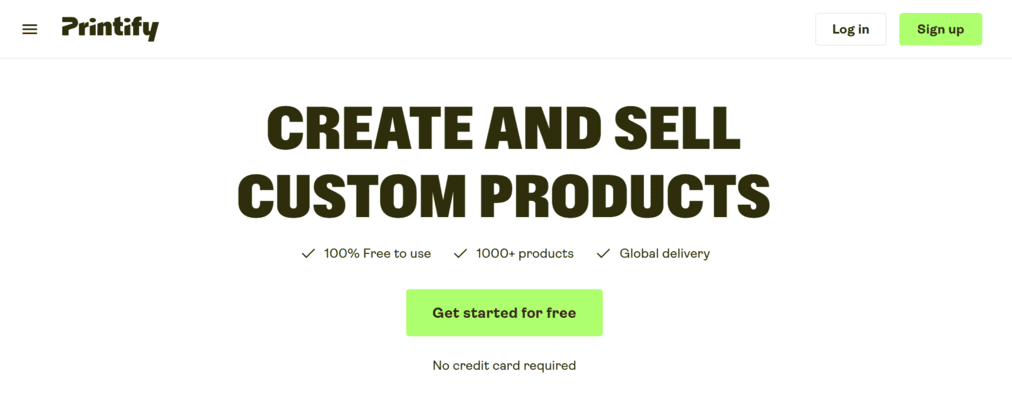
Printify is a technology platform that enables anyone, anywhere, to sell custom merchandise without the complexities of managing inventory, negotiating contracts, or handling global order fulfillment.
Printify is notable for its vast network of more than 90 print providers globally and its extensive selection of products in the print-on-demand industry. You can't sell products directly through it. Instead, it acts as a service provider that integrates with your existing store. It can be connected to platforms like Etsy, WooCommerce, Wix, Shopify, and so on.
Fees
Printify is free, and you only pay for the products you sell, but the costs vary based on the provider you choose.
Pros
- Extensive selection of 1000+ products.
- Global delivery.
- 100% free to use.
- Offer the most competitive prices in the industry.
- Provide sellers with white-label services.
Cons
- Product quality varies from print providers.
- Shipping time is slow.
2. Zazzle
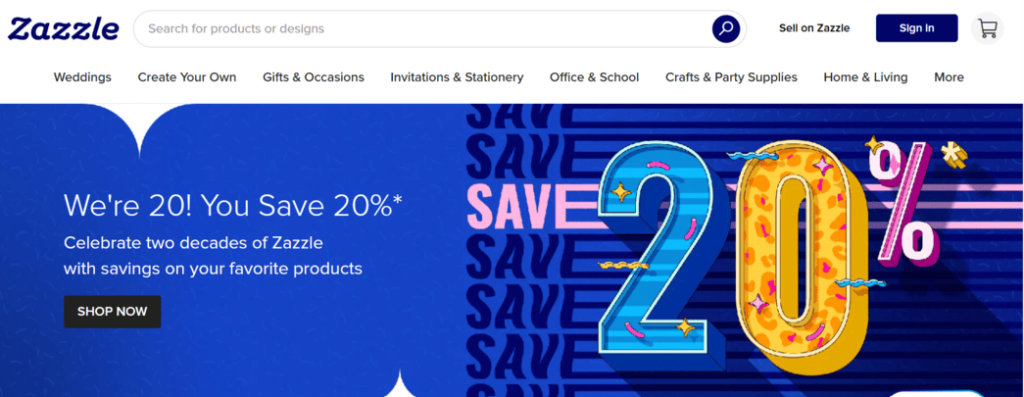
Zazzle is another famous POD site like Redbubble. Zazzle provides design and manufacturing services for personalized products. Users can create their own products on Zazzle and sell them to buyers around the world.
Zazzle has dozens of product categories to choose from, from weddings to home & living. Additionally, Zazzle offers an affiliate program to support your business growth.
Fees
Creators can register on Zazzle for free, and both designing and selling products are free of charge. Creators can set their own royalty rates, which will be added to the final price of the product. Zazzle takes a commission from each sale.
Pros
- Wide range of products.
- Organic traffic is second only to Redbubble.
- Customizable storefronts.
- Flexible royalty rates.
- Global delivery.
Cons
- Inconsistent product quality.
- Zazzle takes a commission from each order.
3.Gelato
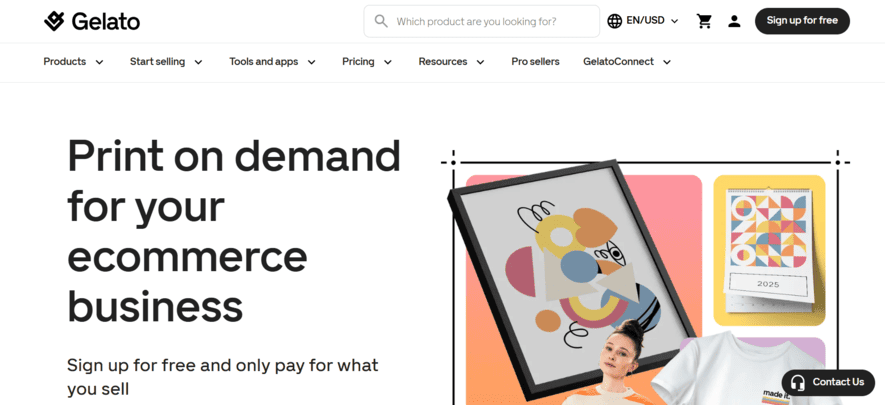
Gelato is one of the best Redbubble alternatives. Gelato allows creators to design and sell personalized products, and it can also integrate with Etsy, Amazon, shopify, TikTok shop, etc.
Gelato doesn't have its own printing facilities or products; all printing services are outsourced to different print providers. It acts as an intermediary between you and print providers.
The categories it covers include clothing, wall art, calendar, cards, phone cases, hats, photo books.
Fees
No upfront or commission fees. Sellers only pay for the products they ordered.
Pros
- World's largest print-on-demand network: 140+ print partners in 32 countries.
- Sell globally, produce locally.
- 1-click integration to the leading ecommerce platforms.
Cons
- Fewer customization options compared to other sites.
- Product quality varies from print providers.
- Higher costs for low-volume orders.
4. Sellfy
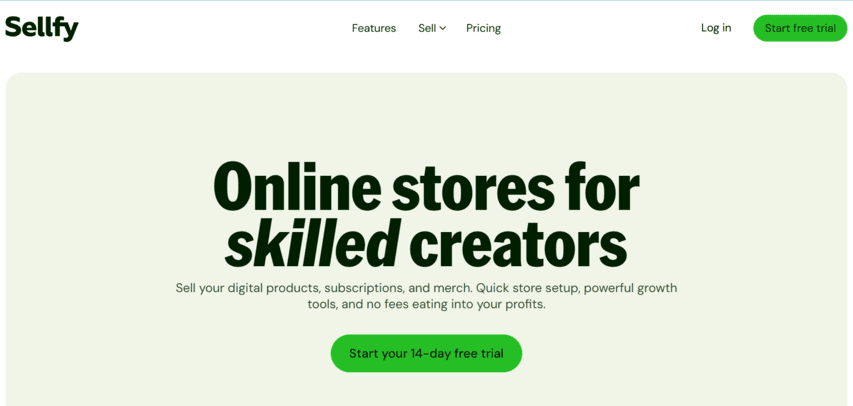
Sellfy is an all-in-one creator platform that allows creators and entrepreneurs to easily sell digital products, and POD physical goods. It provides tools for setting up an online store, managing sales, and marketing products without requiring technical knowledge. Sellfy is ideal for artists, designers, and content creators who want a simple and effective way to sell their work online.
Fees
No free plan. Pay at least $22 per month.
Pros
- Customize your own storefront
- Support both digital and physical goods
- Provide built-in tools for marketing
- Eco-friendly
Cons
- Higher cost for small and medium-sized sellers
- Only 100+ print-on-demand products
5. Society6
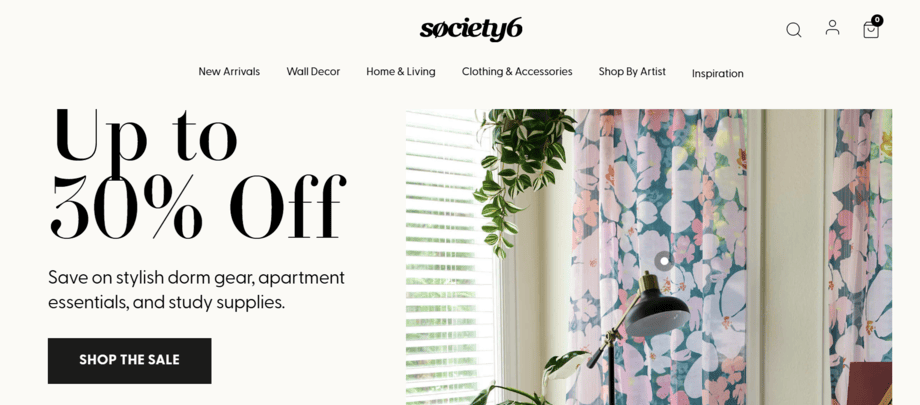
Society6 is an online marketplace that allows artists and designers to sell their artwork as prints, home decor, clothing and wall art. Society6 is well-known for prioritizing artist earnings and maintaining creative freedom for creators.
The platform offers print-on-demand services, meaning artists can upload their designs, and Society6 handles the printing, packaging, and shipping. It's a popular platform for creators to monetize their art by offering products like wall art, furniture, accessories, and more.
Fees
Free plan: 10 design uploads and applies a 10% commission on all sales.
Basic plan: $4.99/month. Upload up to 100 designs. No commission fees.
Pro Plan: $12.99/month. Upload up to 10000 designs. No commission fees.
Pros
- Easy to set up a store and personalize your own storefront.
- Highly prioritize creators by offering the best profit margins for artists.
- Appeal to a targeted audience who values high-quality, artist-created products.
Cons
- Fierce competition
- Can not set your prices with the free plan
- Customization restricted to product designs
6. Printful
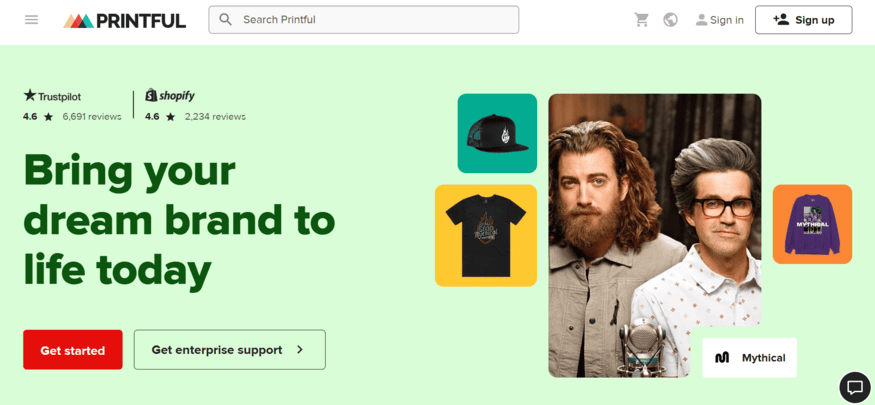
Printful is a fulfillment platform that prints and ships custom products on demand. Since launching in 2013, Printful has built a strong reputation in the POD industry for its high-quality products, competitive pricing, and top-notch customer service. While it mainly focuses on apparel and home decor, Printful also offers printing services for items like phone cases, mugs, posters, blankets, and more.
Fees
Printful is a fulfillment platform that prints and ships custom products on demand. Since launching in 2013, Printful has built a strong reputation in the POD industry for its high-quality products, competitive pricing, and top-notch customer service. While it mainly focuses on apparel and home decor, Printful also offers printing services for items like phone cases, mugs, posters, blankets, and more.
Pros
- 24/7 Support team helps sellers start, grow and thrive
- Seamlessly connect to any eCommerce site
- High product quality
Cons
- Higher product base cost compared to other companies
- Fewer production sites
7. Spreadshirt
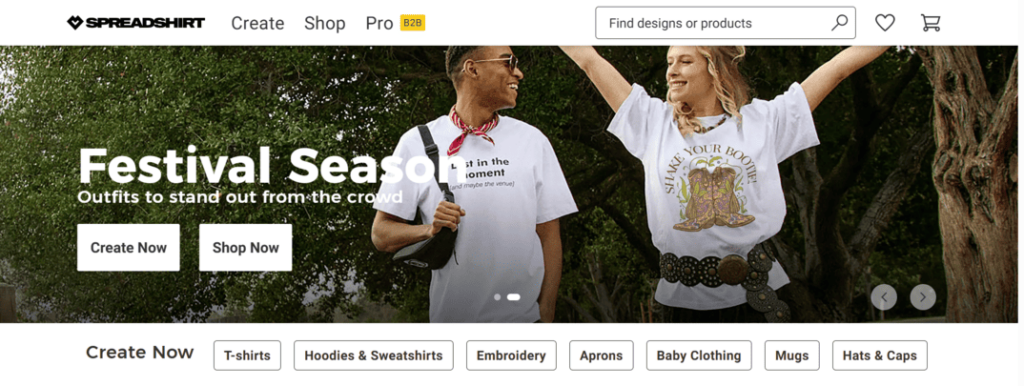
Spreadshirt is a print-on-demand platform that allows users to design and sell personalized clothing and accessories online. Creators can open their own stores, upload designs, and Spreadshirt handles production, shipping, and customer service. Or creators can integrate with external ecommerce platforms.
It’s ideal for artists, designers, and brands to sell products without holding inventory.
Fees
No up-front costs
A commission-based model
Pros
- Global reach
- No upfront costs
Cons
- Variations in printing quality
- No control over fulfillment
8. Spring (Previously Teespring)
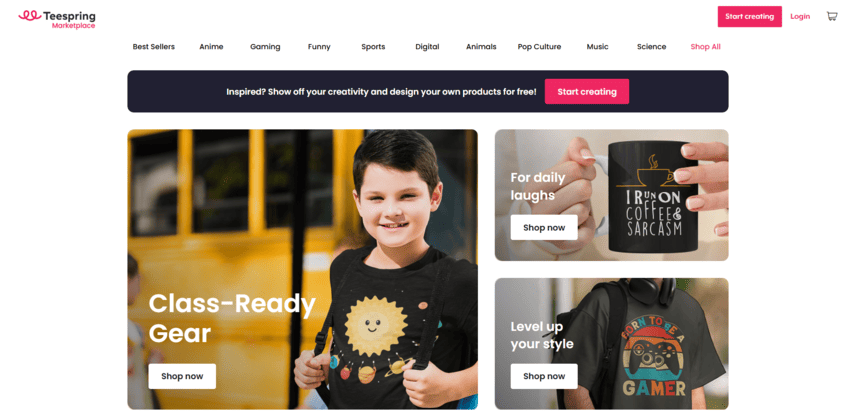
Spring is one of the best sites like Redbubble that allows creators to design and sell custom merchandise without upfront costs or inventory. It handles production, shipping, and customer service, so creators can focus on design and promotion. Spring also integrates with YouTube, making it easy for influencers to monetize their audience through merch sales.
Fees
No upfront costs
After deducting the base cost, sellers on Spring keep all the remaining profit.
Pros
- Integrate with YouTube
- No upfront costs
- Control over pricing and profits
Cons
- Limited POD customization options
- The product base cost is relatively high
9. Merch by Amazon
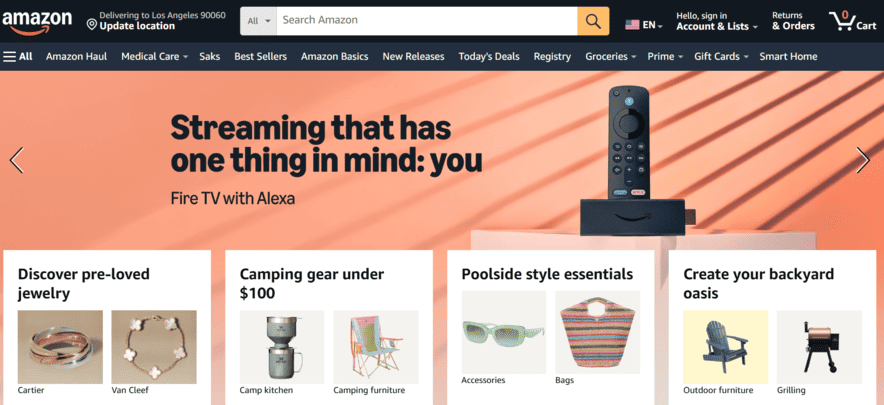
Merch by Amazon is a Print-on-Demand service platform launched by Amazon. It allows creators to upload their own designs and apply them to products such as T-shirts and hoodies for sale. Users don’t need to manage inventory, production, or shipping, Amazon takes care of manufacturing, fulfillment, and customer service. Creators earn royalties based on each sale.
Fees
No upfront fees, creators earn money through royalties.
Pros
- One of the world’s largest marketplaces
- Global Amazon fulfillment network
Cons
- High competition
- Frequent policy changes
10. Fine Art America
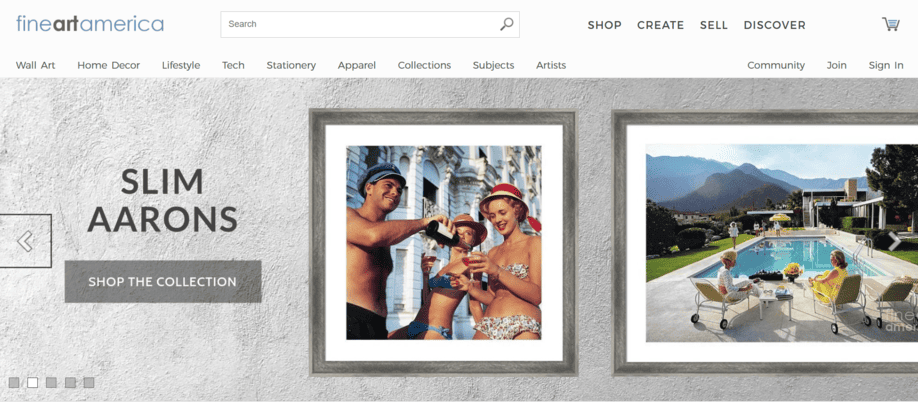
Fine Art America is the world’s largest art marketplace and print-on-demand technology company. It caters mainly to photographers, graphic designers, and illustrators seeking to showcase and sell wall art and framed prints.
Not only can you buy a wide range of art-related products and create your own designs, but you can also sell your artwork on the platform, making it an excellent space for artistic exchange.
Fees
Set up for free
Premium plan with greater exposure and sales opportunities($30 / Year)
No commission fees
Pros
- High-quality print products
- An intuitive interface
Cons
- Premium membership needed for exposure
- Limited market exposure
5 Other Sites Like Redbubble
If the 10 sites above don’t meet your needs, here are 5 more worth exploring, although these five may not be as well known as the ones listed above.
- UltraPress
- CafePress
- CustomCat
- Printbest
- Design By Humans
How to Choose the Best Redbubble Alternative for Your Needs?
When choosing the POD site that best suits you, consider the following factors:
- The type of products you want to sell
- The quality of the printing products
- Shipping time
- Competition level
- Commission rates
- Integration with other e-commerce platforms
- User reviews
For example, if you want to integrate with your Etsy shop, you can choose Printify or Gelato. If product quality is your priority, either Society6 or Printful is a good option.
How to Start Selling POD on Etsy
Etsy is the world’s largest marketplace for handmade and creative goods, with over 400 million monthly visits. Buyers actively search for personalized products, leading to a high conversion rate. Selling POD products on Etsy is a great business model, especially for independent designers, artists, and small entrepreneurs.
Here’s a step-by-step guide to get started:
Step 1: Create an Etsy Seller Account
You can refer to this blog: How to Start an Etsy Shop.
Step 2: Choose a Print-on-Demand Provider
You can choose the most suitable POD provider according to the considerations mentioned above.
Step 3: Design and Choose Products
If you're not sure what to sell yet, you can use Ehunt for help. Ehunt showcases best-selling and trending products on Etsy, helping you discover product ideas.
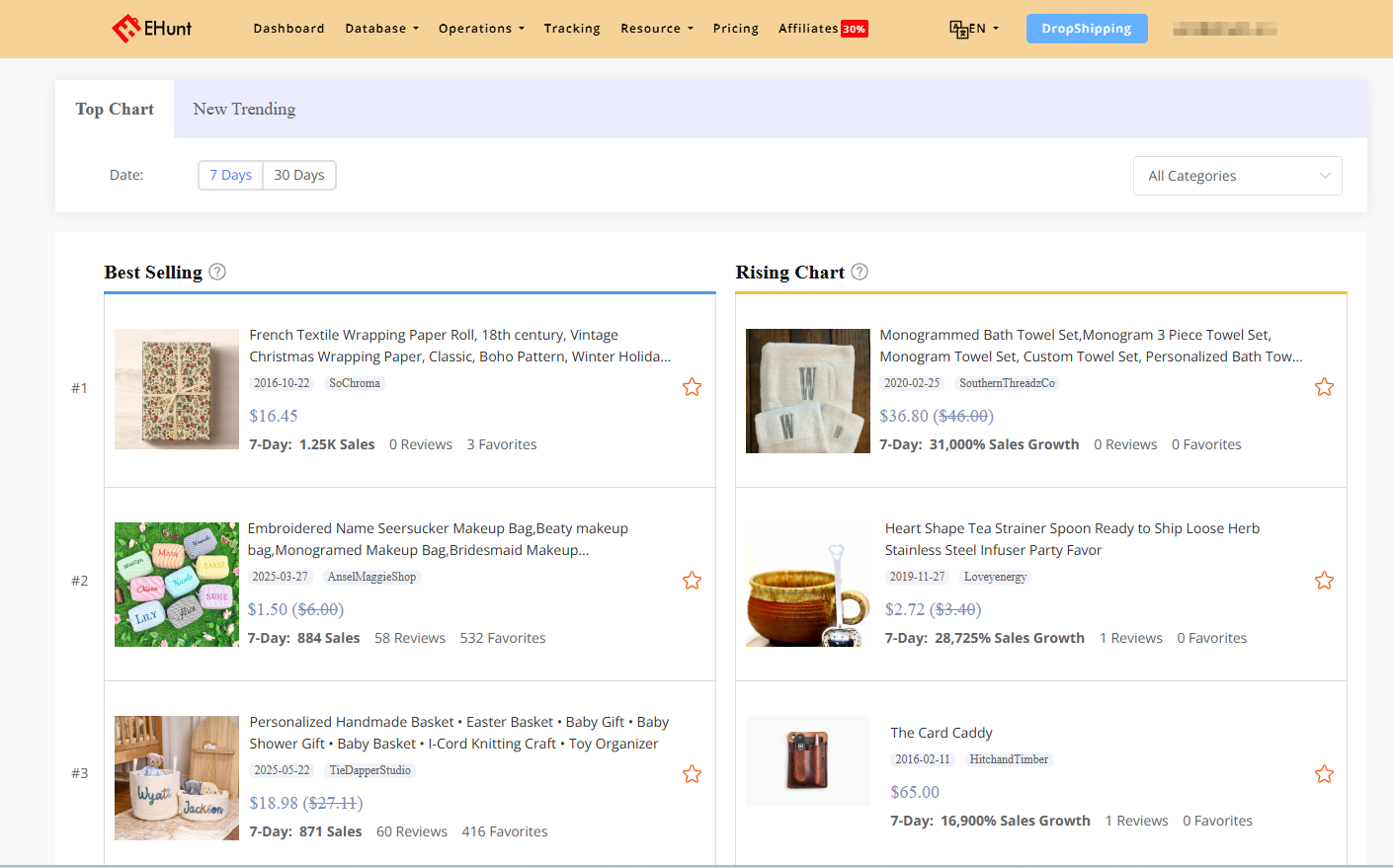
Once you've chosen a product, you can use the design tools provided by your POD provider to create unique designs for it.
Step 4:Set Up Listings
Create listings for your products on Etsy, including high-quality images and detailed descriptions.
If you are a new seller, there are some suggestions for you: How to Make a Good Etsy Listing.
Step 5: Manage Orders and Fulfillment
Once an order is received, the POD provider will handle production and shipping directly to the customer.
You need to monitor your orders and ensure timely communication with customers.
FAQs
Is there a better site than Redbubble?
There are many excellent POD platforms on the market, such as Printify and Zazzle. You can refer to my introductions above and your needs to choose the one that suits you best. For example, if you want to integrate with your Etsy shop, you can choose Printify or Gelato. If product quality is your priority, either Society6 or Printful is a good option.
Is it better to sell on Society6 or Redbubble?
The decision between Society6 and Redbubble comes down to your creative priorities and personal preferences. If you're looking for diverse product offerings, pricing flexibility, and premium print quality, Society6 might be the right platform. However, if you prefer an intuitive platform, an active artist community, and access to a global customer base, Redbubble may be a better option.
Is Redbubble trustworthy?
Yes, Redbubble is a well-established and trusted online marketplace, widely respected by both creators and buyers. Since its launch in 2006, it has grown to become the leading global platform for print-on-demand products, reflecting its strong reputation and reliability.
Conclusion
In 2025, creators have more choices than ever when it comes to print-on-demand sites like Redbubble. Whether you're looking for higher profit margins, better product quality, or more store control, there's a site that fits your needs. Explore these 15 sites, test your designs, and find the one that helps you grow your brand most effectively.