 EN
EN A Simple Guide to Etsy Keywords for More Traffic & Sales

You’ve listed your product on Etsy but still get little or no traffic, and in most cases the problem isn’t the product itself, it’s the Etsy keywords. Many beginners choose keywords by guessing, which often leads to low search visibility. On Etsy, keywords help connect your listing with what buyers are searching for, so if they’re not well chosen, your product’s visibility can be significantly reduced, even if the product itself is good. Simply put, keywords are your traffic entry point.
We'll Show you in follow contents:
What Are Etsy Keywords?
Etsy keywords are the words and phrases buyers type into the search bar on Etsy when they’re looking for products. These can be broad terms like “necklace” or more specific phrases like “personalized birthstone necklace.”
For sellers, keywords are how you describe your product to Etsy’s search system. You place them in key areas of your listing, including:
- Titles
- Tags
- Categories and attributes
- Listing descriptions
How Do Etsy Keywords Work?
Etsy uses keywords to understand what your listing is about and decide when it should appear in search results. When a buyer searches for something, Etsy scans listings and looks for keyword matches in titles, tags, categories, and other listing details. When your keywords match real search queries, your listings have a much better chance of appearing in search results.
How to Find the Best Keywords for Etsy?
Finding the right keywords on Etsy is about understanding how real buyers search. Instead of guessing, you should rely on data, patterns, and proven sources. Below are three practical methods beginners can use to discover high-potential keywords.
Etsy Search Suggests
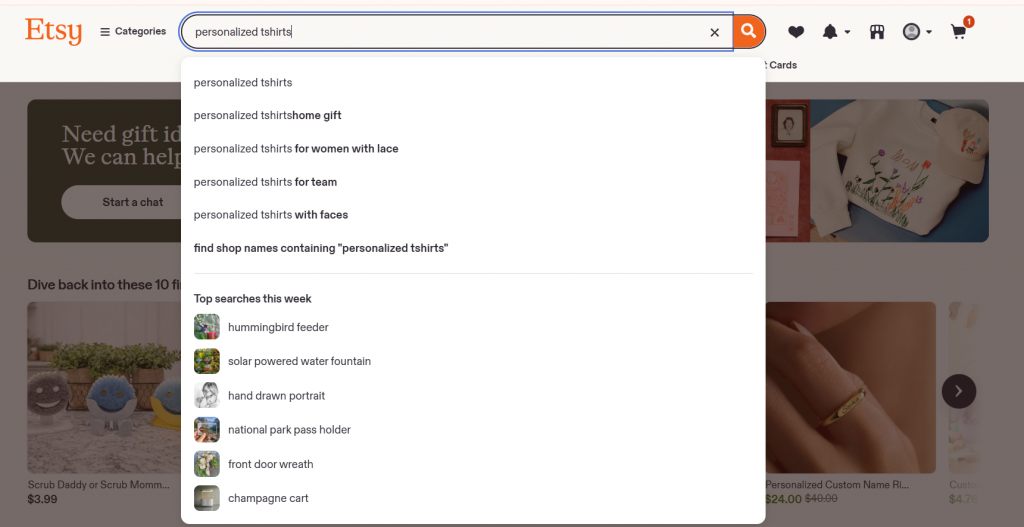
The Etsy search bar is one of the simplest and most reliable keyword sources. When you start typing a product idea, Etsy will automatically suggest phrases based on real buyer searches.
These suggestions reflect actual demand, making them especially valuable for beginners. You can type a broad keyword (e.g., “dog mug”) and note the longer phrases that appear, such as “dog mug personalized” or “dog mug funny.”
To get the most out of this method, try:
- Typing different variations of your product
- Adding letters (a, b, c…) after your keyword to uncover more ideas
- Focusing on longer phrases, which often have clearer buyer intent
This method is quick, free, and a great starting point for building a keyword list.
Analyze Competitors
Another effective way to find keywords is by studying successful listings in your niche. Top-ranking products already reflect what works in Etsy search.
Start by searching your main product keyword and reviewing the first few pages of results. Pay attention to:
- Titles: what phrases are repeated across top listings
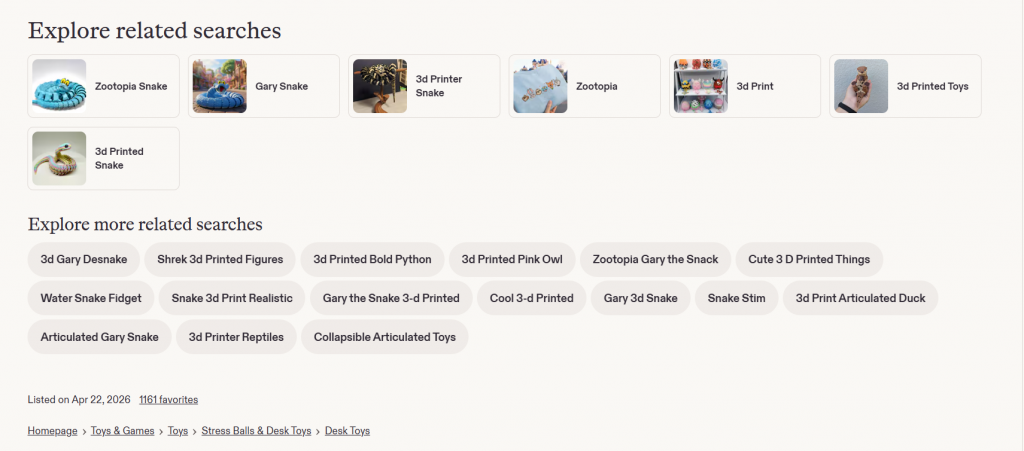
- Tags (not visible to buyers): use the “Explore more related searches” section at the bottom of listing page to find additional keyword ideas
- Product positioning: how they describe the item
The goal is not to copy, but to identify patterns. If multiple best-selling listings use similar keywords, it’s a strong signal that those terms are worth targeting.
Etsy Keyword Tools
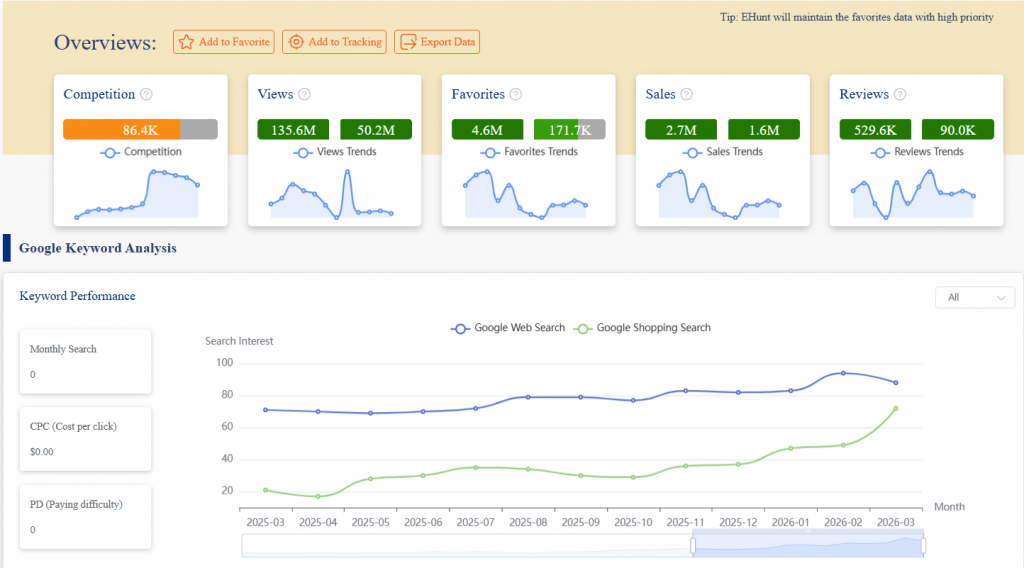
Keyword tools help you move beyond guessing by providing data such as search volume, competition level, and keyword variations. This makes it easier to identify which keywords are worth targeting before adding them to your listing on Etsy.
One of the best Etsy keyword tool is EHunt. It helps sellers discover keyword ideas, analyze demand, and evaluate competition more efficiently, so you can focus on keywords that have real potential to bring traffic and sales.
It also allows you to view competitors’ tags, which are normally not visible to other users, since only the seller can see the tags used in a listing.
With a tool like EHunt, you can quickly validate keyword choices instead of relying on guesswork, making your SEO process more data-driven and effective.
How to Use Keywords on Etsy?
Finding good keywords is only half the job, the real impact comes from how you use them in your listing on Etsy. Etsy looks at multiple parts of your listing to understand what your product is about, so placing keywords correctly can significantly improve your visibility.
Here’s how to use keywords effectively in each key area:
Categories
Categories function as built-in keywords. When you select a category, your listing is automatically associated with a range of related search terms, including broader parent categories.
To use categories effectively, always choose the most specific option available. This helps Etsy better understand your product and match it with more relevant searches. Because categories already cover basic product terms, there is no need to repeat those exact phrases in your tags, which can be better used for more specific keywords.
Attributes
Attributes, such as color, material, size, and occasion, act as additional keywords behind the scenes. They help Etsy match your listing with more refined and detailed search queries.
Filling out all relevant attributes increases your chances of appearing in filtered searches and long-tail queries. For example, selecting both a specific color and a broader color category can help your product appear in more variations of buyer searches.
Attributes are especially valuable because they expand your keyword reach without taking up space in your tags.
Titles
Your title is one of the most important elements for keyword placement. It should clearly describe your product while incorporating your primary keyword in a natural way.
Although you can use up to 140 characters, only the first 30–40 characters are usually visible in search, so place your main keyword at the beginning. Use natural capitalization (avoid too many ALL CAPS words) and make sure the title is clear and easy to read.
An effective title places the main keyword at the beginning, followed by one or two supporting phrases that add context. While it is important to include relevant keywords, readability should always come first. Titles that are overly repetitive or stuffed with keywords can reduce clarity and may perform worse in search.
Listing descriptions
Listing descriptions provide additional context for both Etsy and potential buyers. While they carry less weight than titles and tags, they still contribute to how Etsy interprets your listing.
Including your main keyword within the first few sentences helps reinforce relevance. Beyond that, keywords should be used naturally throughout the description rather than forced into the text. A well-written description balances search optimization with clear, persuasive product information.
Tags
Etsy tags are the most flexible and strategic place to use keywords. Etsy allows up to 13 tags per listing, and each tag represents an opportunity to match a different search query.
To use tags effectively, focus on multi-word phrases that reflect how buyers actually search. Long-tail keywords are particularly valuable because they tend to have clearer intent and often face less competition. Instead of repeating the same words, aim to cover different variations, audiences, and use cases related to your product.
Using all available tags and diversifying your keyword choices will significantly increase your listing’s chances of being discovered.
How to Choose the Right Keywords for Your Etsy Listing?
Choosing keywords on Etsy is not just about finding popular search terms, it’s about finding the right balance between demand, competition, and relevance. A good keyword should help your listing get seen by the right buyers, not just more buyers.
Demand
A keyword is only useful if people are actually searching for it. High-demand keywords indicate real buyer interest and can bring consistent traffic to your listing.
However, very broad high-demand keywords are often highly competitive, so the goal is to find keywords that have steady search volume without being overly saturated.
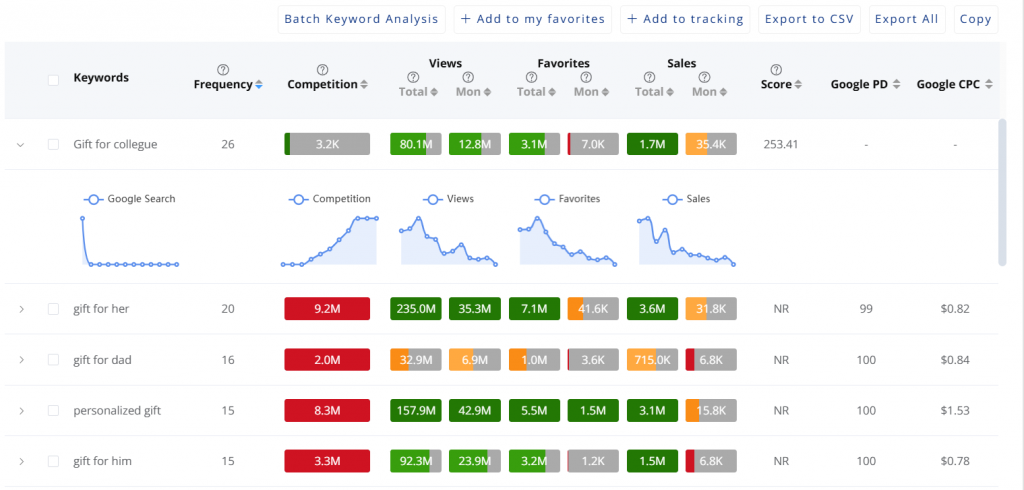
In the EHunt keyword tool, you can use “Views” and “Favorites” to measure demand.
Low-to-medium competition
Competition level determines how hard it is for your listing to rank. If too many sellers are targeting the same keyword, it becomes difficult to gain visibility, especially for new shops.
A good keyword usually has enough demand but manageable competition, giving your listing a realistic chance to appear in search results and gain traction over time.
In the EHunt keyword tool, you can use “Competition” to measure competition level.
Strong relevance to your product
Relevance is one of the most important factors. Even if a keyword has high traffic, it won’t help if it doesn’t accurately describe your product.
Etsy’s search system prioritizes listings that closely match buyer intent, so your keywords should clearly reflect what you are actually selling. Irrelevant keywords may bring clicks, but they rarely convert into sales.
FAQ
What are the 13 Etsy tags?
The 13 Etsy tags are the keyword phrases you can add to a listing on Etsy to help describe your product and improve search visibility. Each listing allows up to 13 tags, and each tag can be a single word or a short phrase.
Sellers use these tags to match different ways buyers might search for the same product, helping the listing appear in more relevant search results.
Should I add keywords to my Etsy listing?
Yes. Adding keywords to your listing on Etsy is essential because they help Etsy understand what your product is and match it with buyer searches. Well-chosen keywords improve your listing’s visibility in search results, which can lead to more traffic and potential sales.
How do I find competitors' keywords on Etsy?
You cannot see all of your competitors’ keywords because Etsy tags on Etsy are not publicly visible.
A practical way to get this information is to use EHunt. It allows you to analyze competitor listings and directly view the keywords and tags they are using, helping you understand what drives their traffic and apply similar strategies to your own listings.
What is the best Etsy keyword research tool?
There is no single “official” tool for keyword research on Etsy, but the best tools are those that help you find high-demand, low-competition keywords based on real Etsy search behavior.
One of the most widely used and effective options is EHunt. It helps sellers discover keyword ideas, analyze search demand and competition, and optimize listings for better visibility. It also allows you to understand what buyers are actually searching for, so you can make more data-driven decisions instead of guessing.
How to Find Long Tail Keywords for Etsy ?
To find long-tail keywords for Etsy, start by typing a main keyword into Etsy search and using the autocomplete suggestions, which reflect real buyer queries. Then analyze top listings to spot repeated phrases in titles and descriptions.
For a more efficient approach, use tools like EHunt, which automatically tags long-tail keywords for you, helping you quickly identify low-competition, high-conversion terms.
How to Do Etsy Keyword Research?
To do Etsy keyword research, start by using Etsy search autocomplete to find real buyer queries. Then analyze top-ranking listings to identify common keywords in titles and descriptions. Finally, use tools like EHunt to check search volume, competition, and discover more relevent high-potential keywords.
Final Words
Etsy keywords are what connect your product to real buyer searches. Without the right keyword strategy, even great listings can struggle to gain visibility.
Instead of guessing, focus on using keywords strategically across your entire listing and refining them over time. Small improvements in relevance and keyword quality can significantly impact your traffic and sales.
If you want to speed up the process, EHunt can help you discover high-potential keywords, analyze competition, and optimize your listings more efficiently.