 EN
EN How to Start Print-on-Demand Business? Complete Guide 2026
Are you still struggling with how to start a POD business? If you want to build a sustainable POD business in 2026, you need more than attractive designs. You need a clear niche, demand research, good products, competitive pricing, strong listings, and a reliable marketing strategy. This guide explains how to start a print-on-demand business in 2026, from choosing a niche to getting your first sales and eventually scaling your store.
Table of Contents
What Is Print-on-Demand?
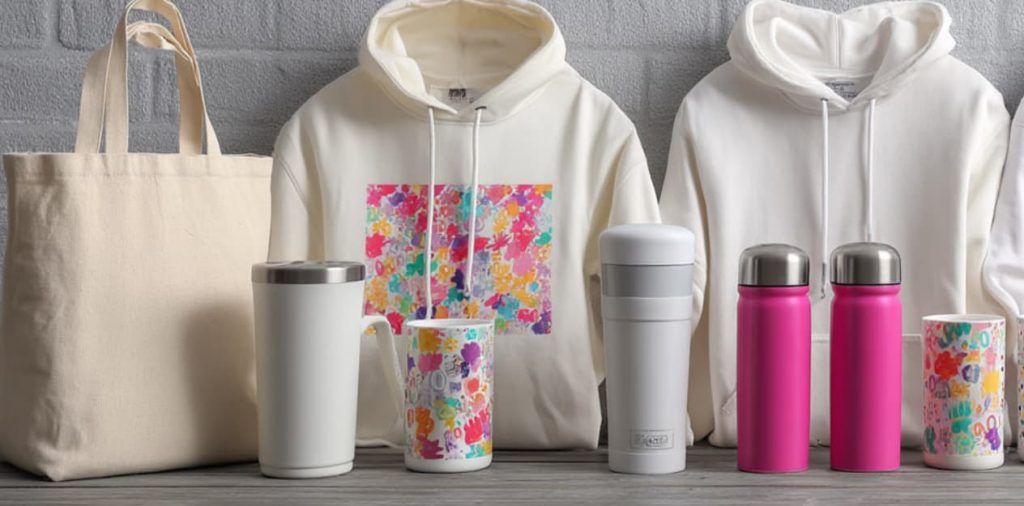
Print-on-demand is an e-commerce model where products are manufactured only after a customer places an order.
Uploading your design to a POD platform and create a product listing. When someone purchases the product, the POD provider prints the design, packages the order, and ships it to the customer.
The typical process looks like this:
- Choose a niche and product.
- Create or source an original design.
- Upload the design to a POD provider.
- Connect the provider to your online store.
- Publish the product listing.
- A customer places an order.
- The POD provider produces and ships the product.
- You keep the difference between your selling price and your total costs.
Popular POD providers include Printful, Printify, Gelato, Gooten, and others. This model removes much of the operational burden associated with traditional e-commerce. However, it does not eliminate business costs. You still need to account for product costs, shipping, marketplace fees, payment processing, advertising, design expenses, refunds, and taxes.
Is Print-on-Demand Still Worth It in 2026?
Yes, but the answer depends on how you approach it.
POD is attractive because the financial risk is relatively low. You can launch products without purchasing inventory and test multiple ideas before investing heavily in a particular product.
The market is also large. Apparel was among Etsy's major GMS-generating categories.
At the same time, those numbers illustrate the challenge: you are competing in a crowded marketplace. Besides, generic designs and cheap blanks are thoroughly saturated, platform fees and rising ad costs have squeezed marketplace margins thin, and the 2026 tariff changes hit anyone shipping across borders.
Therefore, the opportunity in 2026 lies not merely in whether T-shirts can be sold online, but in whether you can identify specific customer groups and create products they truly want.
| Metric | 2026 Figure | What It Means for a New Seller |
| Etsy active buyers | 86.5 million | A massive reachable audience |
| Etsy active sellers | 5.6 million | You are competing against millions |
| Global POD market | USD 13.1B (2026) → USD 57.5B (2033) | Growing |
| POD CAGR (2026–2033) | 23.6% | One of the fastest-growing e-commerce segments |
How to Start a Print-on-Demand Business
Step 1: Choose a Profitable Niche
Your first major decision is your niche. A niche is a specific audience, interest, lifestyle, profession, hobby, or community that your products are designed for.
Instead of creating a store for “funny T-shirts,” for example, you could focus on:
- Gifts for dog owners
- Book lovers
- New mothers
- Specific hobbies
- Personalized wedding gifts
The narrower the audience, the easier it can be to understand what customers want. However, narrow does not mean extremely small. A niche needs enough potential customers to support a business.
How to Validate a Niche
Before designing dozens of products, research whether people are actually buying.
Research:
- Etsy search results
- Amazon products
- Google Trends
- TikTok
- Competitor stores
- Customer reviews
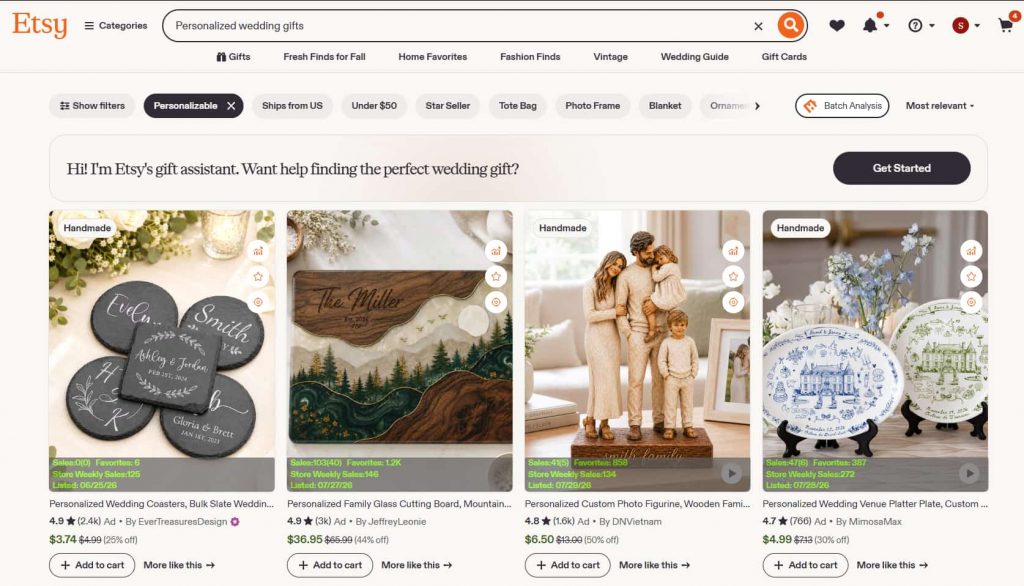
Pay particular attention to products that have both demand and room for differentiation. For example, you could investigate narrower customer groups such as a particular profession, lifestyle, or gift occasion.
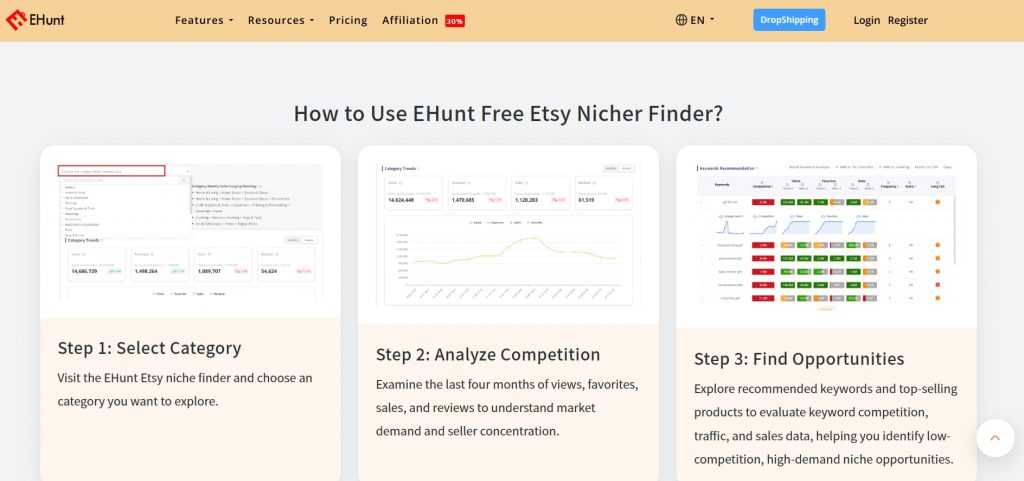
If you wish to use more advanced tools to obtain more accurate sales data for your products. You can use EHunt. Tools such as EHunt can also help sellers research products, keywords, competitors, and market opportunities before committing to a niche.
The goal is not to find a niche with zero competition. Zero competition may simply mean there is no demand. The better target is: existing demand, manageable competition and room for differentiation.
Step 2: Research Products and Competition
Once you have a potential niche, don't immediately start designing. First, investigate what customers are already buying.
Look at competing listings and think:
- Which products appear repeatedly?
- What price ranges are common?
- Which designs receive strong engagement?
- What complaints appear in customer reviews?
- What products seem oversaturated?
- Where are competitors leaving opportunities?
Customer reviews are particularly valuable. A competitor may have hundreds of sales but also receive complaints about:
- Poor print quality
- Incorrect sizing
- Slow shipping
- Uncomfortable materials
- Weak packaging
- Poor customer service
These complaints can become opportunities for your own business.
What's more, do not copy competitors, competition research should help you understand the market, not reproduce another seller's products. Avoid copying others' designs, brand names, logos, characters, competitor product descriptions and so on.
Your goal should be to identify market demand, then create something original.
Step 3: Create Original Designs
Your designs are one of the most important parts of a POD business.
You don't necessarily need to be a professional graphic designer. Tools such as Canva, Adobe Express, and AI-assisted design tools can help beginners create visual concepts.
A successful design should match:
- Your target audience
- Your niche
- The product itself
- Current customer preferences
- The occasion or use case
- Your brand identity
Tips: Check Commercial Rights
This is extremely important.
Do not assume that an image, font, phrase, or AI-generated asset can automatically be used commercially.
Before publishing a design, verify the licensing terms and avoid intellectual property belonging to other brands.
Using copyrighted characters or trademarked phrases can result in listings being removed—or worse, legal problems.

Step 4: Choose Where to Sell
Once you have your products and POD supplier ready, you need to decide where to sell them. In general, you have two main options: selling on a marketplaces or building your own store.
Selling on a Marketplace
Popular options include Etsy, Amazon, eBay, and TikTok Shop.
Pros:
- Built-in traffic: Marketplaces already have millions of shoppers, so you don't have to build an audience from scratch.
- Easier to get started: You can create listings and start testing products without building a complete website.
- Search and discovery: Platforms such as Etsy and Amazon allow customers to discover products through search, while TikTok Shop can generate sales through short-form content and product recommendations.
Cons:
- Platform fees: Listing, transaction, payment processing, and advertising fees can reduce your profit margin.
- High competition: Your products appear alongside thousands or millions of competing listings.
- Less control: You have limited control over the platform's design, policies, algorithms, and customer relationship.
- Platform dependency: Changes to search algorithms, fees, or seller policies can affect your store.
Best for: Beginners who want to test products and take advantage of existing marketplace traffic.
| Platform | Type | Difficulty | Best for |
| Etsy | Marketplace | Easy | Beginners selling handmade, custom, or niche POD products |
| TikTok Shop | Marketplace | Medium | Sellers who can drive sales through short-form content and social media |
| Amazon Merch on Demand | POD marketplace | Easy | Designers who want Amazon to handle production, shipping, and customer service |
| Printify Pop-Up Store | Hosted storefront | Easy | Beginners who want to launch a simple POD store without building a full website |
Building Your Own Store
You can also use platforms such as Shopify to create your own branded store.
Pros:
- More control: You control your store design, branding, product presentation, and customer experience.
- Stronger brand building: An independent website makes it easier to build a recognizable brand instead of relying entirely on a marketplace.
- More control over customer relationships: You can build an email list and develop repeat-customer strategies.
- Flexible marketing: You can drive traffic through SEO, social media, influencers, email marketing, and paid advertising.
Cons:
- You have to boost traffic: Unlike marketplaces, your store does not automatically come with a large audience.
- More work: You are responsible for website setup, marketing, analytics, and customer acquisition.
- Ongoing costs: You may need to pay for hosting, subscriptions, domains, apps, payment processing, and advertising.
Best for: Sellers who want to build a long-term brand and are prepared to invest in marketing and customer acquisition.
For beginners, starting with a marketplace can be a practical way to test your niche and products because you can take advantage of existing customer traffic.
If your products start generating consistent sales, building your own store can give you more control over your brand and help reduce your dependence on a single marketplace.
You don't necessarily have to choose only one. Many successful POD businesses use marketplaces for product discovery and customer acquisition while building their own store as a long-term brand channel.
Step 5: Build High-Quality Product Listings
A great design can still fail if customers cannot find or understand the product.
Your listing should include:
A Clear Title
Use relevant search terms naturally. Don't fill the title with unrelated keywords.
Strong Product Images
- Different angles
- The design at a useful size
- How the product looks in context
Stunning Product Videos
- Details of the product
- The operation of using the product.
- Product production process
Accurate Description
- Materials, size
- Fit
- Product features
- Customization options
- Processing time
- Shipping expectations
Keywords
Keyword research helps you understand what shoppers actually search for.
- Search volume
- Competition
- Related keywords
- Long-tail keywords
- Seasonal terms
- Buyer intent
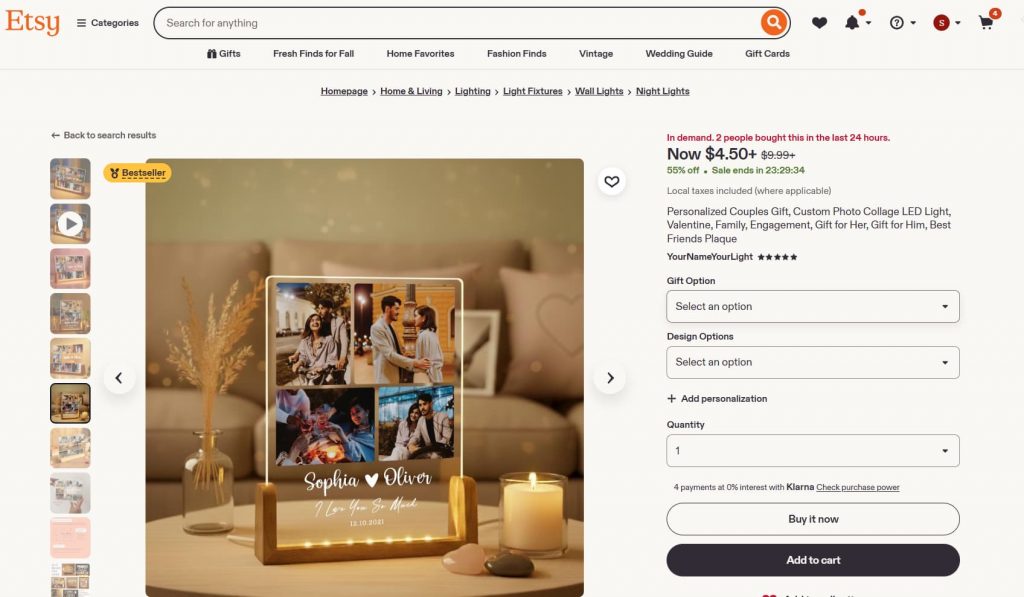
When conducting keyword analysis and listing optimization, EHunt can provide additional insights into potential products and keywords before you create your listings.
Step 6: Market Your POD Business
You need traffic and exposure to attract your target audience. There are several ways to market POD products.
Use Platform-Based Discovery
If you sell on marketplaces such as Etsy, Amazon, you can take advantage of their built-in search and recommendation systems.
For example, you can improve your product visibility by:
- Using relevant keywords in product titles and descriptions
- Choosing appropriate categories and attributes
- Creating clear, appealing product images
- Keeping your listings accurate and complete
- Monitoring which products and keywords generate the most interest
- Using the in-site advertisements on these platforms
Bring Traffic Through External Marketing
If you run your own store, such as a Shopify or WooCommerce store, you generally need to generate more of your own traffic.
Some common approaches include:
- Social media: Share product content, behind-the-scenes videos, tutorials, or user-generated content on platforms such as Instagram, TikTok, Pinterest, and YouTube.
- Content marketing: Create blog posts, guides, or videos that answer questions related to your niche and attract potential customers through search.
- Paid advertising: Use platforms such as Google Ads, Meta Ads, or TikTok Ads to reach specific audiences.
- Influencer and creator marketing: Work with creators whose audiences match your target customers.
- Email marketing: Build an email list and use it to introduce new products, promotions, and other relevant content.

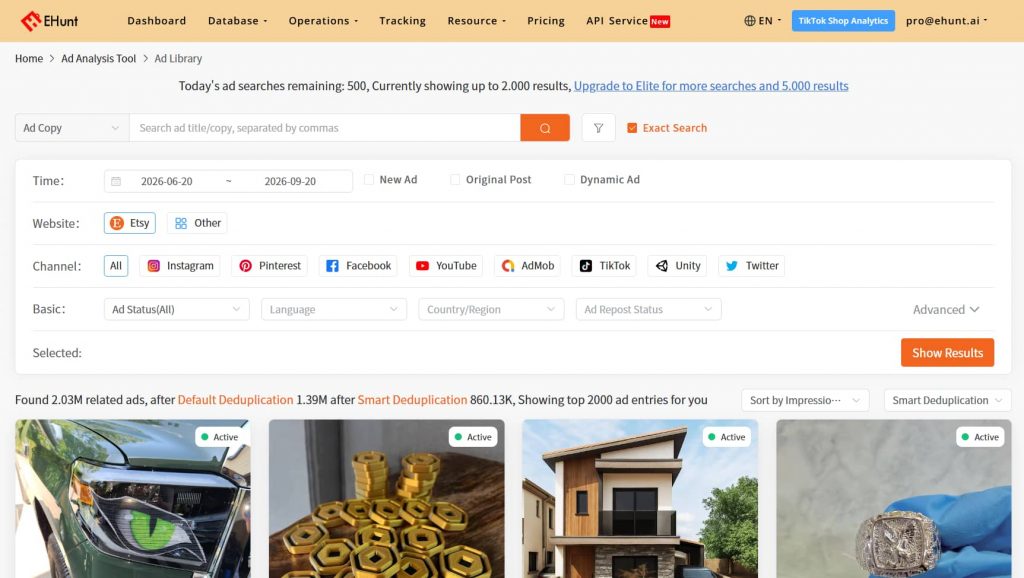
You can use the AD Library feature of EHunt to view popular advertisements on platforms such as Instagram, YouTube, Facebook, Pinterest, TikTok, and X, and learn marketing strategies.
Track Results and Adjust Your Strategy
Marketing should not be based only on how much traffic you receive. Pay attention to metrics such as clicks, conversion rate, customer reviews, and sales.
For example, if a product receives plenty of views but few purchases, the problem may be related to pricing, product images, the listing, or the product itself. If a particular marketing channel consistently brings relevant customers, you may choose to invest more resources there.
You can use the data to decide what to improve. The goal is not simply to get more traffic, but to find sustainable ways to reach customers who are actually interested in your products.
How Much Does It Cost to Start a POD Business in 2026?
One of the biggest advantages of POD is that you can start relatively cheaply.
Your initial expenses may include:
- POD platform: potentially $0 upfront
- Marketplace listing fees
- Store subscription
- Domain
- Design tools
- Product samples
- Marketing
- Advertising
- Branding
For example, Printify currently offers a free plan, while its Premium plan starts at $39/month or $299/year.
Printful also has a free plan, while its Growth plan currently costs $24.99/month and provides product discounts and other benefits.
This means you don't necessarily need a large budget to test the model.
A realistic beginner budget should include money for samples and testing. If you have a small budget, spending $50–$200 on validating products may be more useful than immediately spending hundreds of dollars on advertising.

Common Print-on-Demand Mistakes to Avoid
Choosing a Niche Only Because It Is Trending
Trends can disappear quickly. Look for sustainable demand rather than relying entirely on short-lived trends.
Creating Generic Products
If a design is too broad, it can be difficult to stand out in a crowded market. Thinking about who the product is designed for, what interests or needs they have, and why they would choose your product over similar options. A more specific niche can make it easier to reach the right customers.
Uploading Hundreds of Designs Immediately
More listings don't automatically mean more sales. Quality and relevance matter more than quantity.
Ignoring Profit Margins
A product can generate revenue while losing money. Always calculate the full cost before setting a price.
Skipping Product Samples
Skipping samples can lead to unexpected quality issues. Ordering a sample allows you to check the actual product, print quality, sizing, packaging, and overall customer experience before making it available to buyers.
Copying Successful Sellers
Competitor research is useful, but copying designs or intellectual property is not a business strategy.
FAQ
Is print-on-demand profitable in 2026?
Yes, POD can be profitable, but profitability depends on product selection, pricing, margins, design quality, traffic, and operating costs. The growing POD market does not guarantee that an individual store will succeed.
How much money do I need to start a POD business?
You can technically start with a very small budget because many POD platforms have free plans and don't require inventory purchases. However, you should budget for product samples, marketplace fees, design tools, and marketing. Starting with around $50–$200 for testing can be reasonable for a small experiment, although actual costs vary considerably.
Can I start a POD business with no design experience?
Yes. Beginners can use tools such as Canva and other design software to create products. However, using templates or AI tools doesn't replace the need for good market research and original ideas.
Is Etsy or Shopify better for POD?
Neither is universally better.
Etsy provides access to an established marketplace and can be easier for beginners who don't have an existing audience. Shopify provides more control over branding and customer experience but requires you to generate your own traffic.
Many businesses eventually use both.
What is the best POD product to sell?
There is no single best product.
T-shirts and apparel are major POD categories, but the best product for you depends on your niche, audience, competition, product quality, shipping costs, and profit margin.
How do I find a good POD niche?
Start by looking for the intersection of demand, competition, and differentiation.
Research marketplaces, Google Trends, social platforms, competitor stores, customer reviews, and keyword data. A niche with existing demand but opportunities for more specific products is often more attractive than a completely untested market.
Conclusion
Starting a print-on-demand business in 2026 is relatively simple when you follow the right process. Follow this guide, choose a profitable niche, research the right products, set competitive prices, and build an effective marketing strategy. By testing, optimizing, and investing more in what works, you can create opportunities for profit and gradually scale your POD business.
If you are still researching which products or niches to enter, tools such as EHunt can help you investigate products, keywords, competitors, and market opportunities before you invest significant time in creating your store.